Jenny Bird recently attended two packed-house events in 2479 that celebrated the music, dance and food of Palestine and the Levant, and the role they play in sustaining culture and identity for diasporic communities.
Until recently I had never listened to Palestinian folk music, danced the dabke or eaten Palestinian food. By happy coincidence a catered concert by folk music ensemble Dabke and Tatreez at the A&I Hall, followed a few nights later by the launch of pop-up restaurant Ghurba at the Coorabell Hall brought glorious glimpses of Palestinian culture to the Byron hinterland.
The A&I Hall was packed. The seven musicians in the Dabke and Tatreez ensemble introduced themselves, and there on the stage was the rich mix of cultures and ethnicities of the Levant of the Eastern Mediterranean: Cyprus, Turkey, Lebanon, Syria, Palestine.
Most of them are graduates of the Edward Said National Conservatory of Music in Gaza City and now live in Australia, part of the growing diaspora of Palestinians living around the world. The Conservatory is now rubble, but music lessons continue. One musician told a story of sharing her grief with her mother, who said to her ‘keep playing music, it connects all of humanity.’ Another asked if anyone knew just how heavy is an accordion, because he had lugged his through the rubble of Gaza to Australia. Playing traditional instruments like the oud, the qanun (flat zither) and the daf (frame drum), and led by the extraordinary voice of Aysa Goknur Shanal, this group of fine musicians sang of love and sorrow and joy. We danced the Dabke – a traditional Levantine folk dance. A big circle formed at the front of the hall. Holding hands, we co-ordinated our steps and danced in joyful celebration and a sense of togetherness.
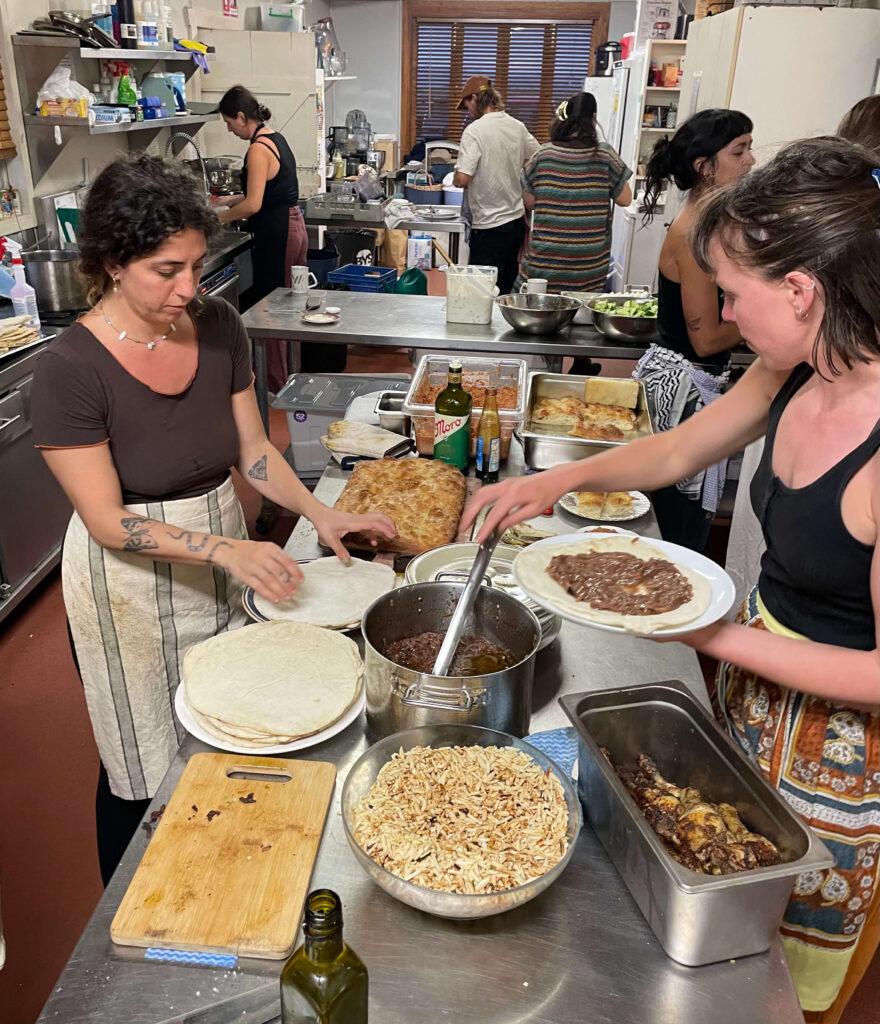
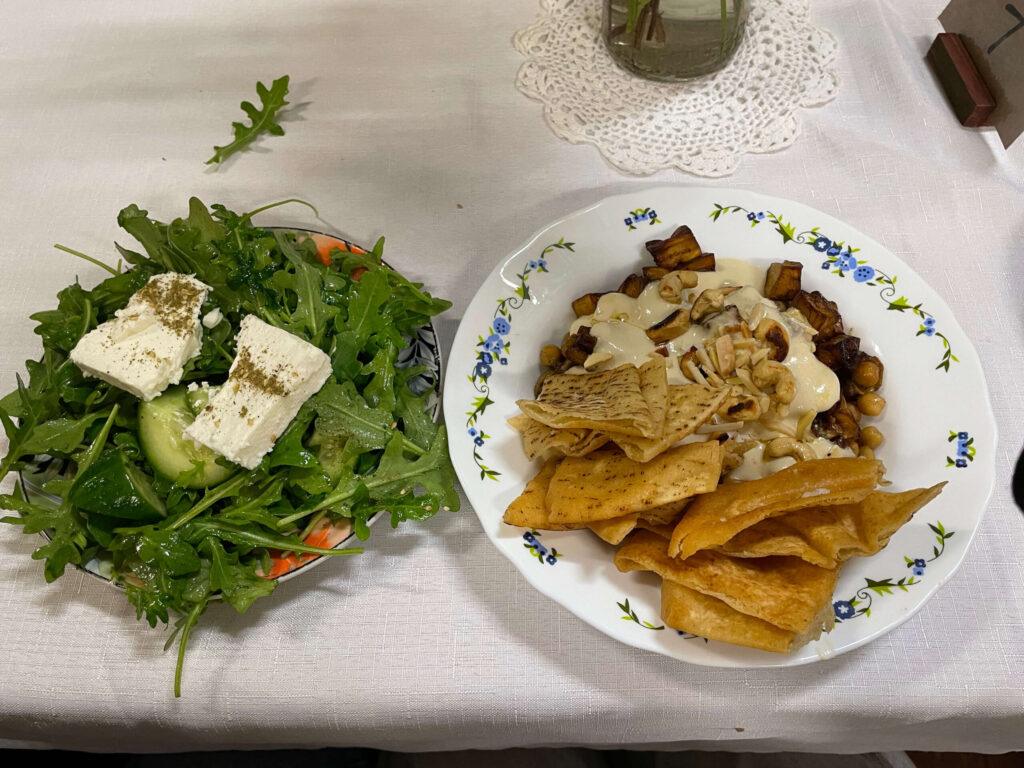
Then I went to Coorabell Hall to the launch of new pop-up Ghurba. I went early – five o’clock – and the hall was already jumping, the queue heading out the door. It was still packed when we left at seven. The food was fabulous – chicken with sumac, chickpeas with eggplant, roasted cashews and tahini yoghurt, lamb and rice filled vine leaves.
Later I asked owner Laura Ayyoub what Ghurba meant, and our conversation turned to a reflection on the meaning of food, and what has brought her to choose this moment to share Palestinian food with the Byron community.
“Ghurba is a word for the feeling of being away from home, uprooted and somewhere foreign” explains Laura. “My grandmother, my teta, was a refugee from the 1948 Nakba. My mother is from Palestine and my father from Jordan. We grew up between New York and Amman in Jordan. I grew up in the kitchen beside my teta whilst my parents ran a catering business. My whole family revolved around cooking, catering and hospitality.”
“Food is a way of remembering where we come from. I’m a third culture kid and food was the main way I felt my culture and my identity.”
“I’ve been dreaming up Ghurba since 2022, but I’ve been quite crippled by events in Palestine. Now I’ve found the courage to share Palestinian joy not just the suffering and the grief. Cooking is my way of resisting and not being erased.”
“The other reason I’m launching Ghurba now is because of the debates here at the moment about migrants, and returning Australia to the myth of a monoculture. I grew up ashamed of being an Arab. Now I am the mother of a two-year-old and I don’t want him to feel ashamed. I want to hold a proud space for the Arabic community on the Northern Rivers, and invite everyone to share our food and culture.”
I remember seeing a photograph some time ago of a great long table laid out through the streets of Gaza with people gathered to share the fast-breaking meal of Iftar at the end of Ramadan. I thought then how vital is the need to share, to celebrate together, to maintain culture, no matter what.
Ghurba will offer a rotating menu of home-cooked seasonal Palestinian food every second Tuesday night at Coorabell Hall. Next pop up is Tuesday 20 October.
Follow on Instagram @eat_ghurba