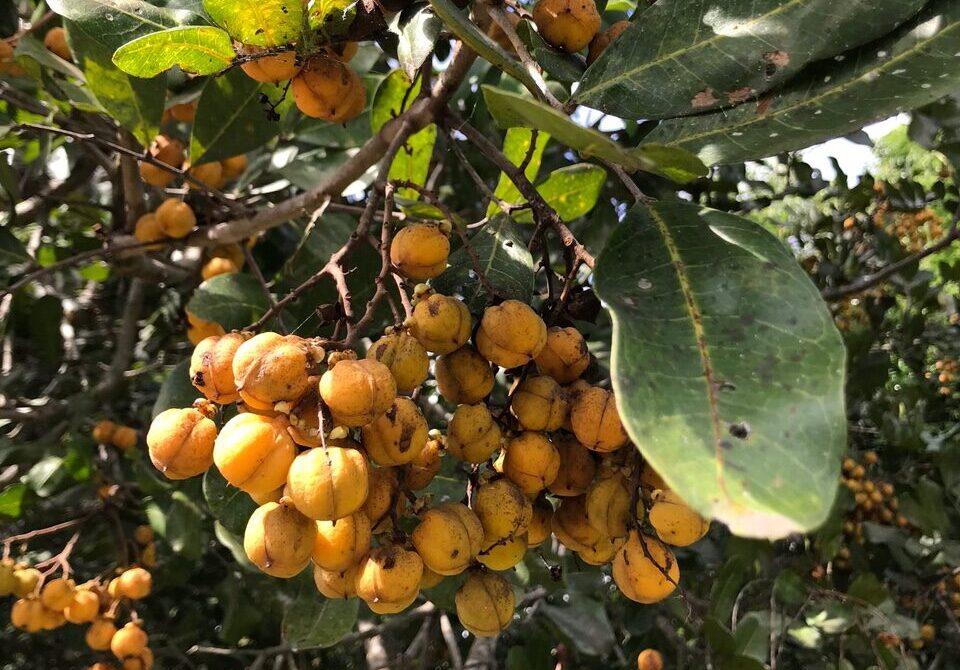
The lovely Tuckeroo (or Carrotwood, as it is sometimes known) is increasingly being seen as a popular and hardy street tree and is also popping up in private and public gardens.
It grows to approximately five metres tall, and its spreading evergreen crown of glossy leaves can be up to five metres wide.
Importantly, the roots are non-invasive.
Indigenous to the east coast, it was originally described in 1834 when found in the Moreton Bay region, where it was growing
in poor sandy soil, exposed to wind and salt. Tuckeroos provided a valuable food source to the local people, who had their own methods of preparing the rich antioxidant flesh of the berries to negate their toxic properties (the berries are not toxic to foraging dogs).
It is slow to establish but then quick-growing, producing masses of greenish-white flowers in panicles that are separately male and female in June and July. Our very strange weather conditions recently have totally confused many of our plants, and I have noticed several trees covered in buds and about to open early. The flowers are replaced by golden yellow capsules that make very attractive vase arrangements and, with the glossy foliage, last for ages in water.
The capsules are full of reddish berries that are easy to propagate, although slow. I have never managed to grow Tuckeroo from any cuttings – young or older wood – so luckily this method is simple, and if the berries are soaked in water for a week or so, they quickly reward with a green shoot.
The flowers attract bees and moths; the capsules are food for currawongs and figbirds, and the flesh is food for butterflies in their larval stage – caterpillars!
The trunk wood is close-grained and tough, with a slightly pinkish tinge, but because the trees are not tall, this prized timber is only useful to woodworkers making small items. It looks a little like sheoak and has the same slightly shiny grain.
Certainly, this is a native tree that deserves to be grown more widely in our Shire, on all the roads that don’t already have shady trees to beautify and help reduce our emissions.
Carole Gamble