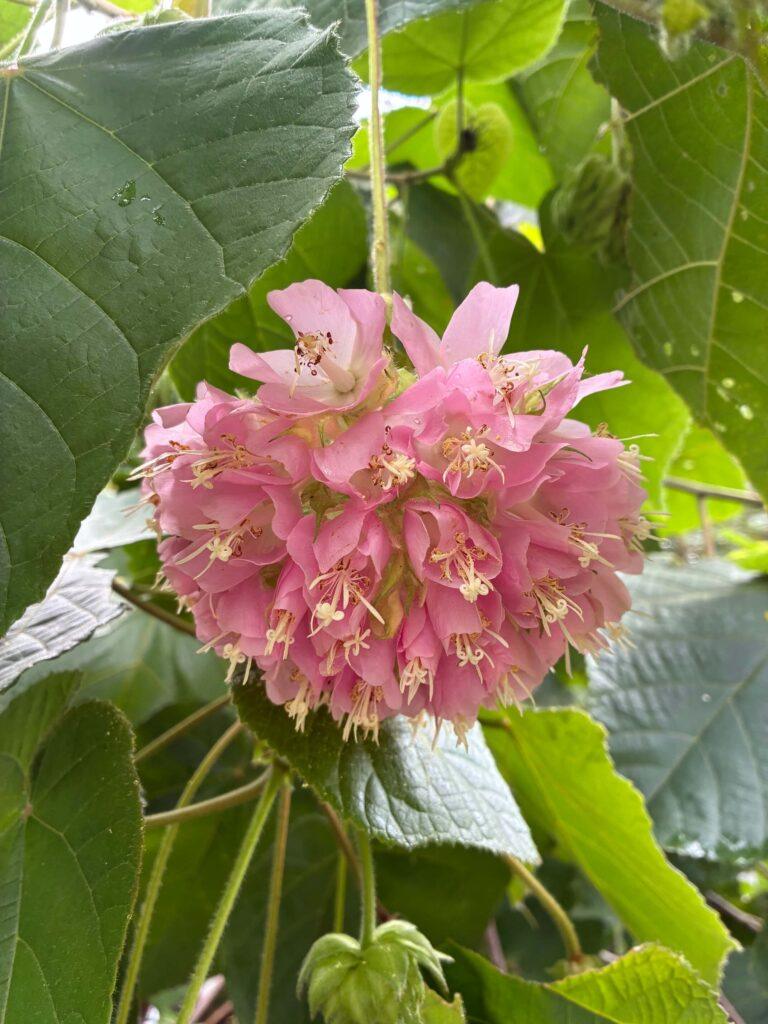
The unusual always catches a gardener’s eye especially in drab winter, says Carole Gamble.
At this time of year, a neighbour’s fabulous Dombeya wallichii is a welcome sight. This large evergreen, vase-shaped plant is currently covered in scores of enormous blooms and even more tightly furled buds, crowding the ends of each cane.
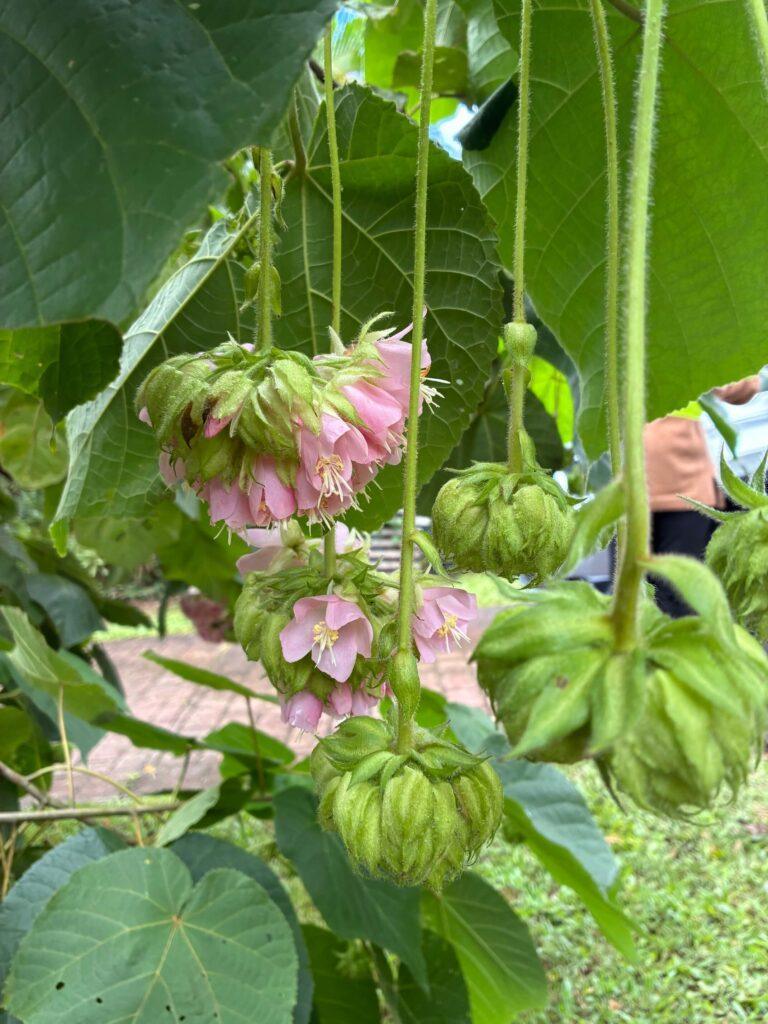
Sometimes known as a tropical hydrangea, it is part of the family Malvaceae. It originated in Madagascar although it has been introduced to parts of South America where it’s naturalised.
It was named for Dr Joseph Dombey, an 18th century botanist and collector of exotic plants, a great fan of the Wardian chest that enabled more successful transportation of specimens by sailing ships to their destinations.
Its size determines placement, as it can grow to many metres high. It has a multi-caned, spreading form although it can respond well to pruning and shaping after flowering.
Dombeya requires full sun and some protection from strong winds as the slender canes with their heavy foliage are quite susceptible to breaking. The flower heads and the large leaves are aromatic and are soft, heart-shaped and quite lovely.
Flowering occurs between autumn and spring and the large – up to 15cm across – flower heads are spectacular.
In dry times, Dombeya should be watered as consistent moisture is vital and a balanced fertiliser, applied during the growing season, will ensure strong canes and flowering.
Propagation is not easy! Cuttings taken have not been successful; seed propagation is apparently lengthy but also not often successful so my neighbour has just gifted me a plant she raised by clever marcotting – also sometimes known as air layering.
For those of you who haven’t tried this, marcotting is definitely not easy nor is it for the impatient plantsperson. I will write about this technique next month and encourage you to try it as we gardeners love a challenge.