Freshly inspired by October’s DINGO Festival and a visit to TheCityWeMake, JennyBirdturns her attention to Bangalow, what makes it special and how we can all play a part in its future. Fast forward to 2050. What do we want our village centres to be into the future?
How can we both protect and invigorate our unique identities, our cultural and economic prosperity?
Once the beating heart of a community, town centres all over Australia are becoming ghost towns. The impacts of climate change-related disasters, closures of essential services such as banks and post offices, and the impacts of online shopping on small retail businesses are all contributing. What were once central service and shopping precincts have moved to the edges of town and into industrial estates – think Bunnings, home centres and shopping malls.
Our hinterland villages are luckier than many but are not immune. Bangalow, for example, has lost hosting-rights to two nationally significant arts festivals in recent years – the Byron Writers Festival and the Bangalow Music Festival. Severe weather events, prohibitive insurance premiums, reduced arts funding and changing social needs contributed variously to their reluctant withdrawal. Outdoor events are particularly vulnerable.
Arts and creative industries are built into the DNA of the Byron hinterland, as much a part of our cultural identity as our local economies. Whilst events like the Mud Trail and the Festival of Small Halls run hinterland-wide, most arts and cultural events happen in the centre of Bangalow, blessed with the A&I Hall, the showground, a pedestrian-friendly Station Street, cafes and shops in walking distance, lots of small halls and a main street with a perfect gradient for a billycart derby.
In the face of ongoing pressure from developers and the NSW Government to accept traditional models of urban development, what can we do to keep our town centres alive and thriving? Town and village plans articulate what is important about a town or village centre and offer protections to heritage character. But can we add to that and be more brave, innovative, exploratory, contemporary, confident in ourselves?
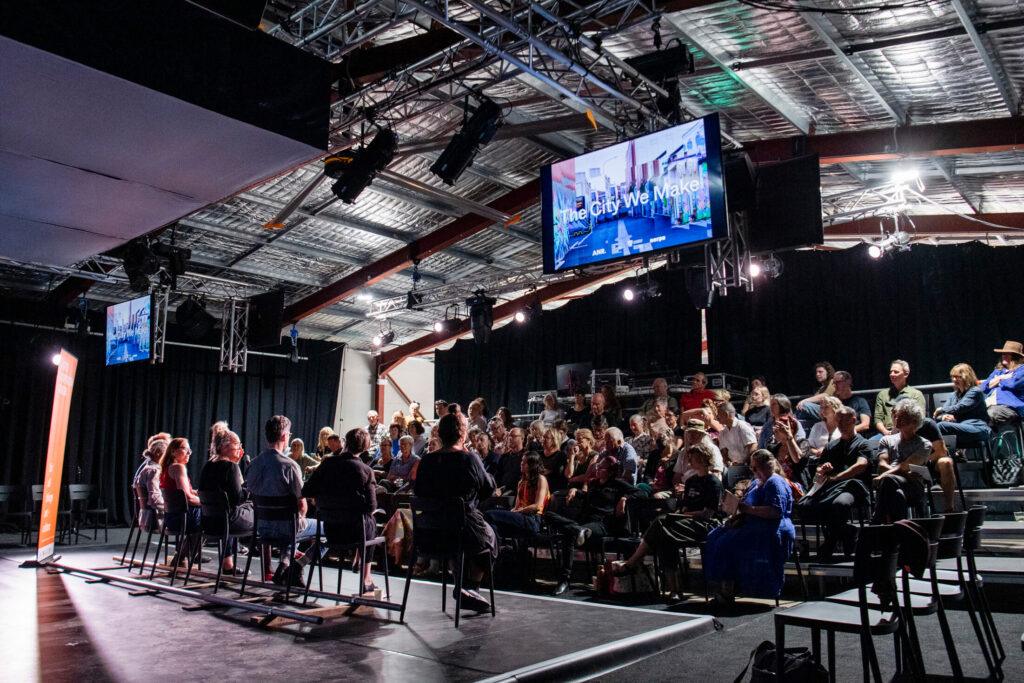
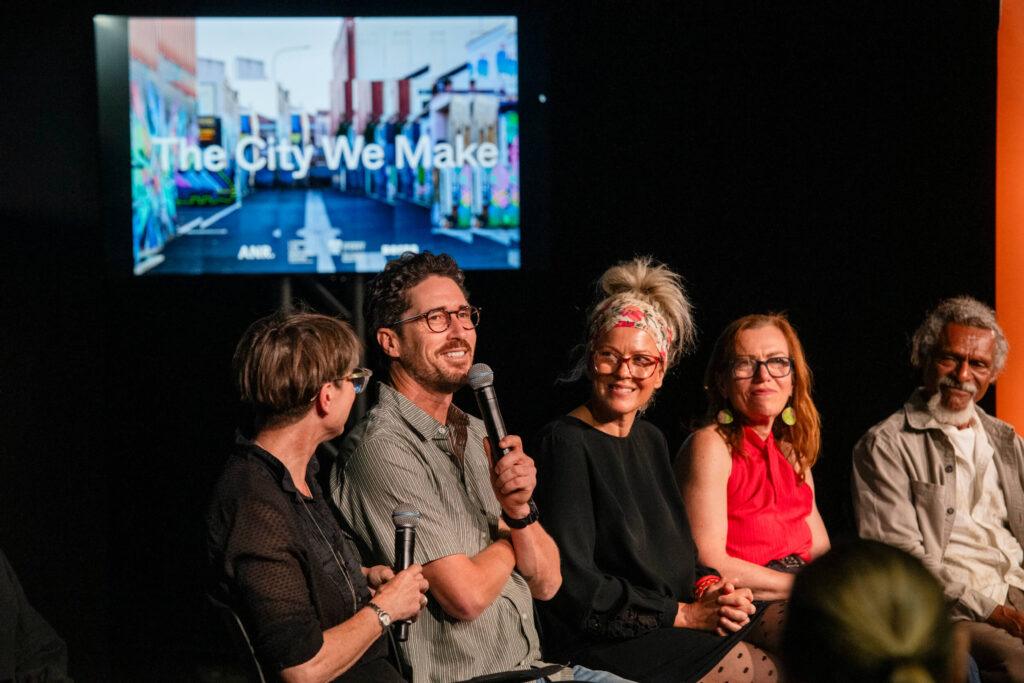
Recently a panel of urban designers, architects and creatives gathered in Lismore for The City We Make at The Joinery (NORPA’s new home) to share blue-sky ideas that might re-enliven the struggling CBD of Lismore. The catalyst for the discussion was an essay written by Dan Etheridge from Living Lab Northern Rivers. Titled ‘Our biggest challenge AND our greatest opportunity’ the essay throws out ideas that “look beyond the usual development playbooks”, ideas that could make the Lismore CBD “unlike any other in the state.”
Panellists discussing the future in ‘The City We Make’ held at NORPA’s new The Joinery Building, Lismore Photo Elise Derwin
Panellists were asked to consider the necessary conditions for creative industries, businesses, service organisations and communities to thrive, and how to turn constraints into opportunities. Whilst the focus of the conversation was on Lismore, some of the take-home messages are worth considering for Bangalow and other hinterland villages, especially in the warm afterglow of the successful DINGO Music & Arts Festival.
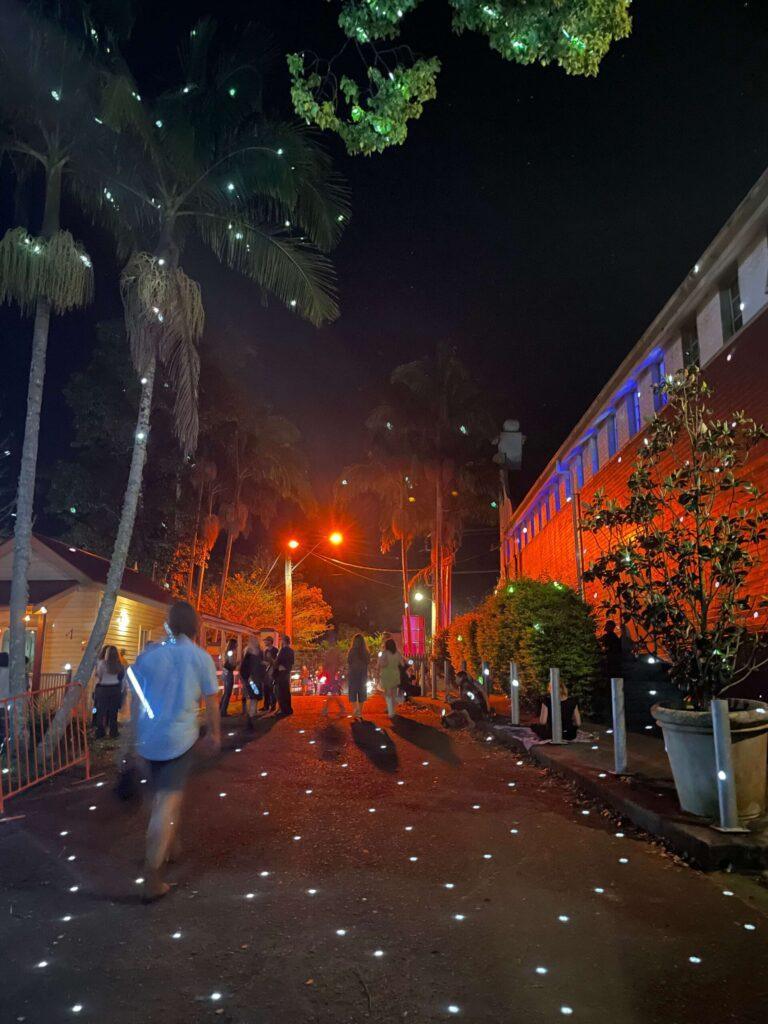
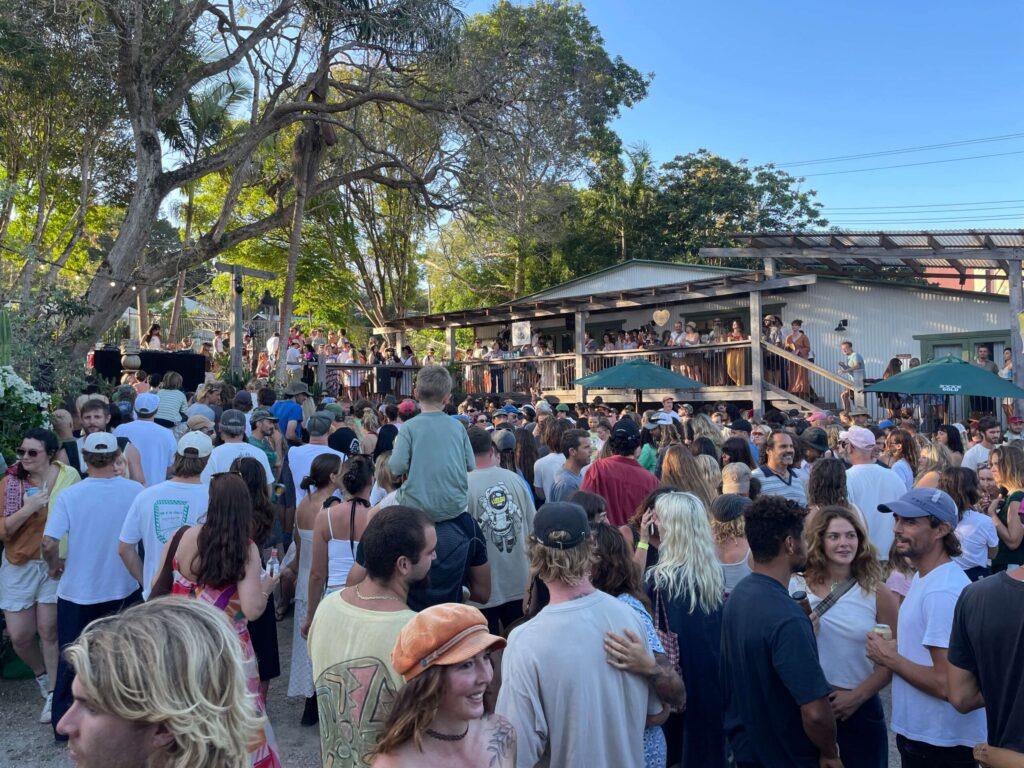
Using communal civic space and unexpected activations in creative places, DINGO succeeded in making the village part of the festival Photo Jenny Bird
Idea 1:Make room and give permission to experiment (and fail)
The DINGO festival organisers took a huge punt on a radically different concept for a festival. They thought small, not big. They used spaces differently – verandahs, shops, walls, front yards, studios, restaurants, small halls, the street, The Lumber Yard, even the stables in the Showground. They tied the program together with the thread of an idea of jazz. It was an experiment that could have failed. It didn’t. The centre of Bangalow buzzed.
Idea 2:Really listen to the community and what they want and need so that what happens is authentic
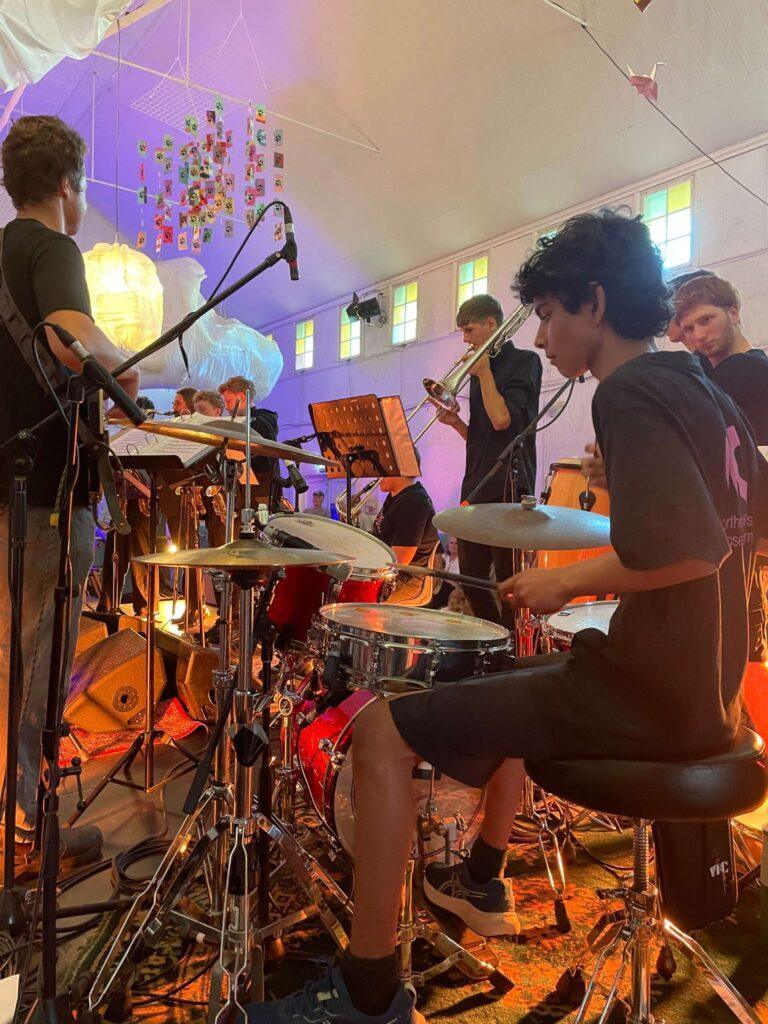
Diverse programming gave audiences plenty of variety and the quality extraordinary, like these young musicians from the Conservatorium Youth Jazz Orchestra Photo Jenny Bird
The organisers had meetings with local stakeholders and worked closely with Council. They understood the character and identity of the Festival precinct and the venues. They programmed in local performers, artists and musicians. It didn’t take over. It fitted inside Bangalow like a hand in a glove. It was authentic.
Idea 3:The arts give expression to multiple points of view and that’s healthy and a good thing
The program itself was diverse – electronic music, live music, local and international musicians, kids’ activities, arts discussions, food, a free day for the community – something for everyone. But DINGO wasn’t just a collection of music gigs stitched together. Driving the program was a question that the Festival posed of itself: ‘What is the culture of the Northern Rivers Region and how can we understand what it is that makes this place such a fertile ground for grassroots creatives and cultural activity?’
Our village centres have all the necessary ingredients for a thriving future: walkable village size, heritage buildings and green spaces, good food, boutique retail. Can we support a rich calendar of contemporary arts and culture events that both fits in and fills these physical spaces, feeds our local economy and enriches our minds and souls?
Inclusion and accessibility made venues popular with all ages – and the beautiful blue sky day was the icing on the cake Photo Jenny Bird