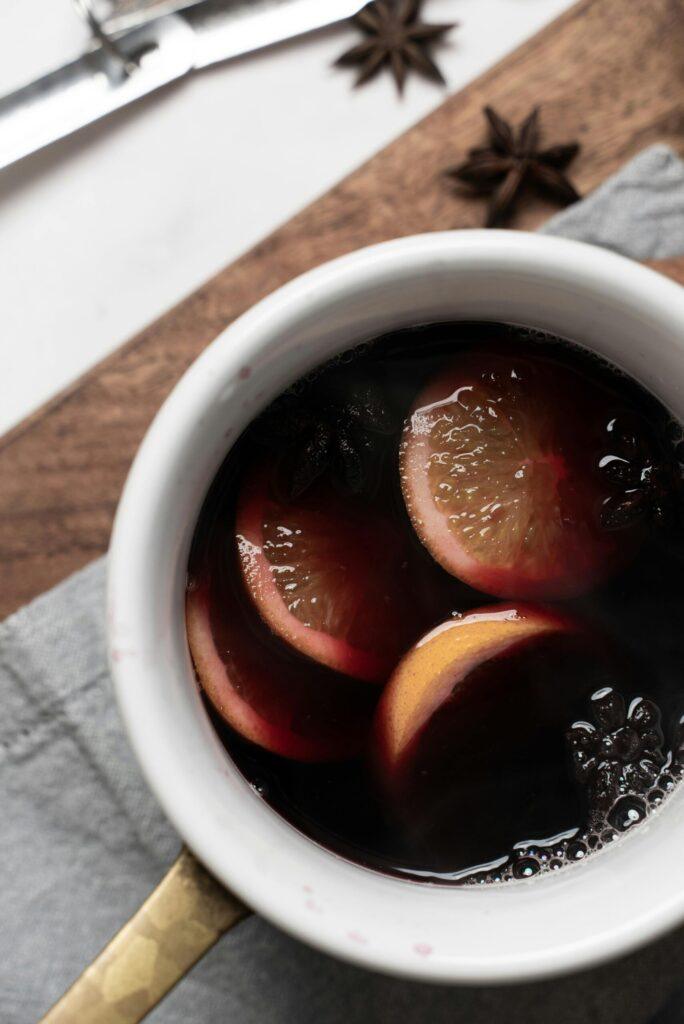
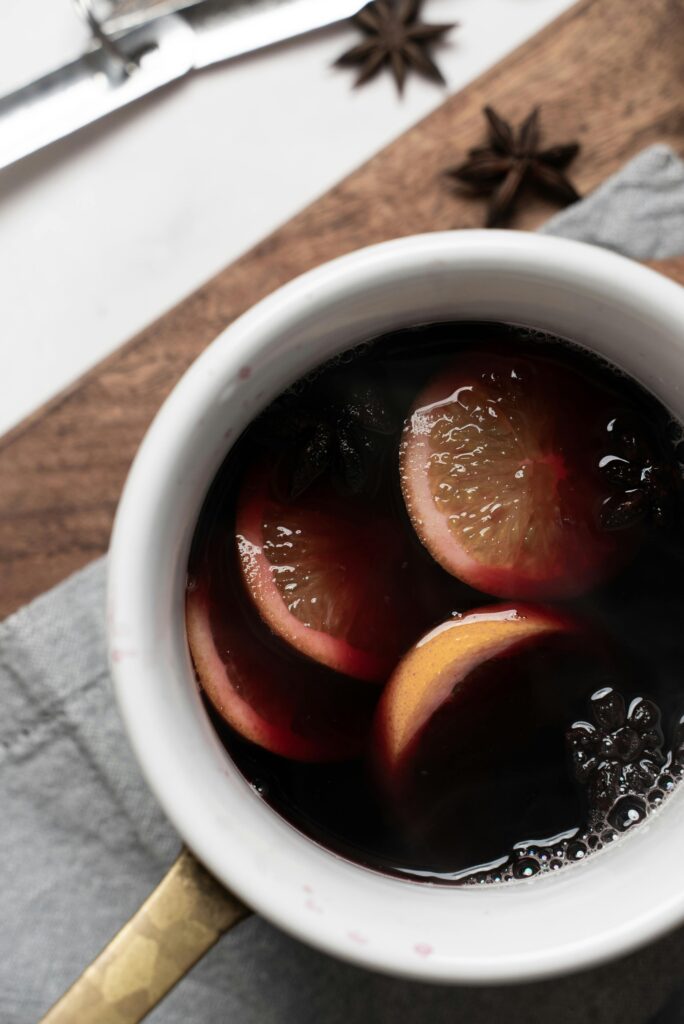
 Family Friendly Mulled Cider
Mulled drinks, particularly those made with wine or cider, have a history that dates back thousands of years. The tradition of ‘mulling’ involves heating beverages and adding spices, and is part of the cuisine and tradition of many cultures and countries.
INGREDIENTS
- 2 litres of apple cider or apple juice
- 1 large orange, sliced
- 1 large apple, sliced
- 3 cinnamon sticks
- 1 tablespoon whole cloves
- 1 tablespoon whole allspice
- 1 teaspoon ground nutmeg
- 1 teaspoon ground ginger
- 1/4 cup brown sugar or honey (optional, to taste)
- 1 teaspoon vanilla extract
METHOD
- Pour the apple cider or juice into a large pot.
- Add the sliced orange and apple to the pot.
- Place the cinnamon sticks, cloves, and allspice in a cheesecloth or spice bag and add it to the pot. This makes it easier to remove the spices later. If you don’t have a cheesecloth, you can add them directly to the pot, but you’ll need to strain the drink before serving.
- Add the ground nutmeg and ground ginger to the pot.
- If using, stir in the brown sugar or honey.
- Heat the mixture over low heat (or set the slow cooker to low) and let it simmer for at least 1 hour. The longer it simmers, the more intense the flavours will be. Stir occasionally.
- Just before serving, stir in the vanilla extract.
- Remove the spice bag or strain the mixture to remove whole spices.
- Serve the mulled cider warm in mugs, garnished with additional slices of orange or apple if desired.
The Ancient Greeks and Romans were some of the first people to experiment with mulling as a way of preserving wine, enhancing its flavour (remember, winemaking was still in its infancy in those days), and warming things up through the cooler winter months. The addition of spices such as cinnamon and cloves, which were exotic and expensive at the time, added a new dimension to the drink and probably helped make those early winemaking endeavours a little more palatable.
Over time, mulled wine became associated with festive occasions, particularly Christmas in Europe, and it’s still a common seasonal tipple in wintertime. Our Christmases tend to be scorchingly hot, and some with European heritage have taken to hosting a Christmas in July event, allowing them to enjoy preparing and eating foods traditionally associated with a Northern Hemisphere festive meal – heavy, hearty game meats, gravy, hot puddings, and mulled drinks.
Dry July is a great opportunity to cook up a batch of mulled cider or juice to enjoy around the fire pit. Mulled drinks are particularly appealing in the cooler months, as they are served warm and spiked with things like honey or ginger, which can soothe winter sniffles and lift your spirits. You can experiment with a variety of juices such as apple or cranberry; non-alcoholic wines or cider would also work, and mixing up your spice blend to include your favourite mix of warm, zesty comfort in a cup.
The dehydrated citrus slices sold by the CWA and in other stores around 2479 are the perfect garnish for your cup of mulled goodness.