
 Anyone who reads my reviews regularly will know that, in general, I love Irish authors.
The story of Milkman is told in an interesting and powerful voice by another Irish author. The characters in the book are seldom given names other than ‘first sister’, ‘second sister’, ‘third brother-in-law’, and ‘wee sisters’ (the children younger than the narrator, who is ‘middle sister’).
The setting is the heartland of the Troubles in Belfast, Northern Ireland, and the book covers a short period of about two months in the 1970s. The narrator is 18 years old and has been romantically involved with ‘maybe-boyfriend’ for almost 12 months. Part of her reluctance to commit is the gossiping, interfering nature of her mother and the neighbourhood in general. Middle sister tends to attract attention because of her quirky habits, such as reading-while-walking and long-distance running. But interest in her becomes focused when she captures the attention of Milkman.
This book manages to be enormously funny at times despite the simmering tension in the background (between the Renouncers of the State and the Protectors of the State), and the sudden, ominous threat posed by Milkman’s unwanted attention.
Milkman is known to be high in the hierarchy of the Renouncers of the State, and when he stops his little white van beside middle sister as she’s out reading-while-walking, she is sufficiently aware of his status to be alarmed and to avoid involvement. The problem is that any interaction with Milkman is immediately transmitted around the neighbourhood, and within 24 hours, middle sister is being told by her ma to end her affair with the married Milkman – at a point in time when she has not spoken a single word to him.
Milkman’s persistence is a constant and malignant threat, having a profound impact on the narrator, who is young, intelligent, and desperately trying to be invisible.
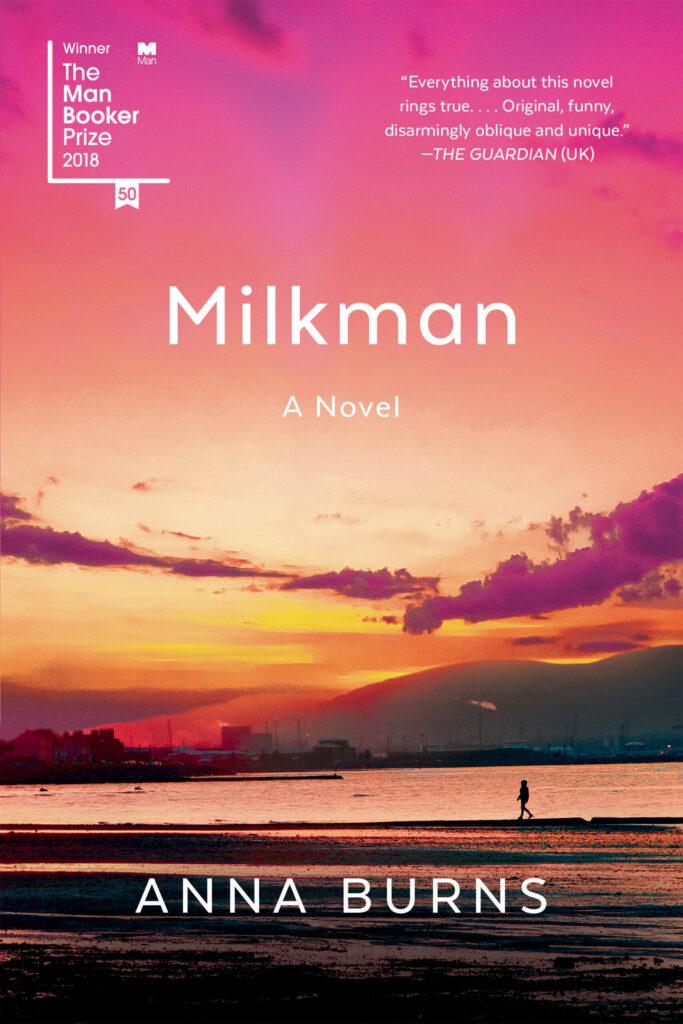
This book, which won the 2018 Man Booker Prize, captured my attention immediately and did not let go until the very last page.