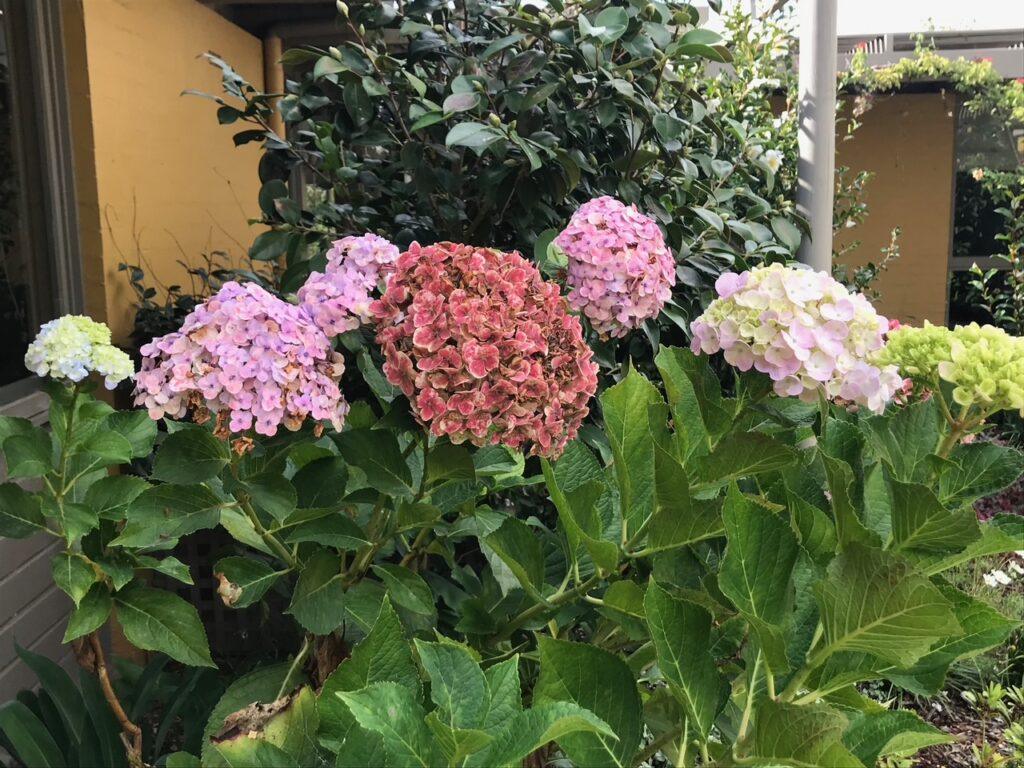
Carole Gamble shares a great tip for growing multicoloured pastel hydrangea.
The hydrangea pictured is in a friend’s beautiful garden, but it was a very unusual specimen. As you can see, the blooms are multicoloured.
Usually the colour depends mostly upon the soil – acidic soils produce blues and alkaline soils are known for their pinks, although these can vary in some gardens, and gardeners often manipulate the pH depending on the colours they favour.
The thing about this one is that my clever friend, who is also, like me, an obsessive propagator, had planted several rooted cuttings together when she planted them!
Fantastic, and I wondered why more of us haven’t stumbled onto this trick. The flowering time has also been extended because of the variation, so it’s certainly a creative success.
The family Hydrangeaceae has over 70 species, but the originals mostly come from parts of Asia, especially Japan, and parts of the east coast of the USA.
They usually flower from early summer through to autumn and are fairly easy to grow, although I have found that they take a year or more to take off, presumably while the root systems establish in our heavy soils. They do best in dappled shade, mostly morning sun and southerly aspects, and need consistent watering in well-drained, rich soil.
Prune after flowering and before the new growth in spring, and keep well mulched. These plants really do require a balanced commercial food as, like roses, they are gross feeders.
To propagate, cut the woody stems diagonally, dip into honey and place in good-quality potting mix, then maybe plant several together, which I plan to do.
To change the colours, try coffee grounds, Epsom salts and banana peels dug in around the stems.
Most are deciduous, although there is an evergreen version that produces relatively small flower heads but is very hardy.