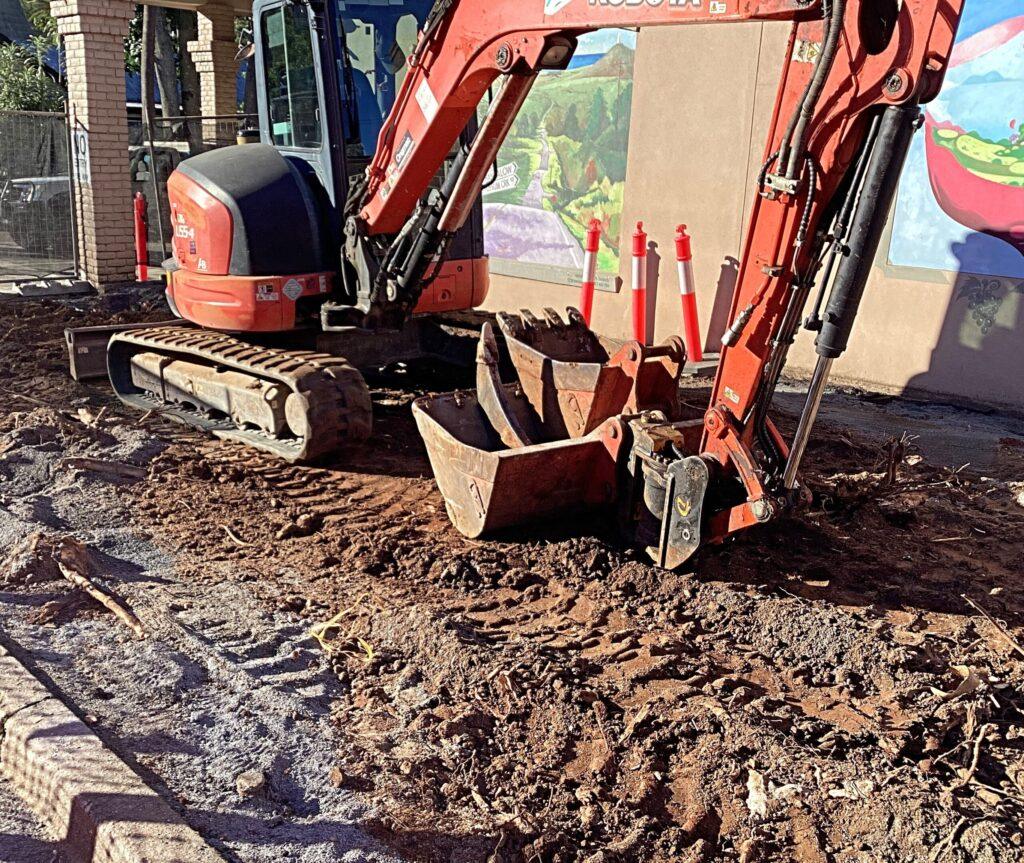
 Many of the trees growing on the footpath of Bangalow’s main street are marked for removal and, in fact, several have already been cut down. Byron Council has deemed them to be a problem due to damage being caused by their roots to the footpaths and buildings. Both the liquidambars beside the Cellar have gone due to damage that is readily evident to the building.
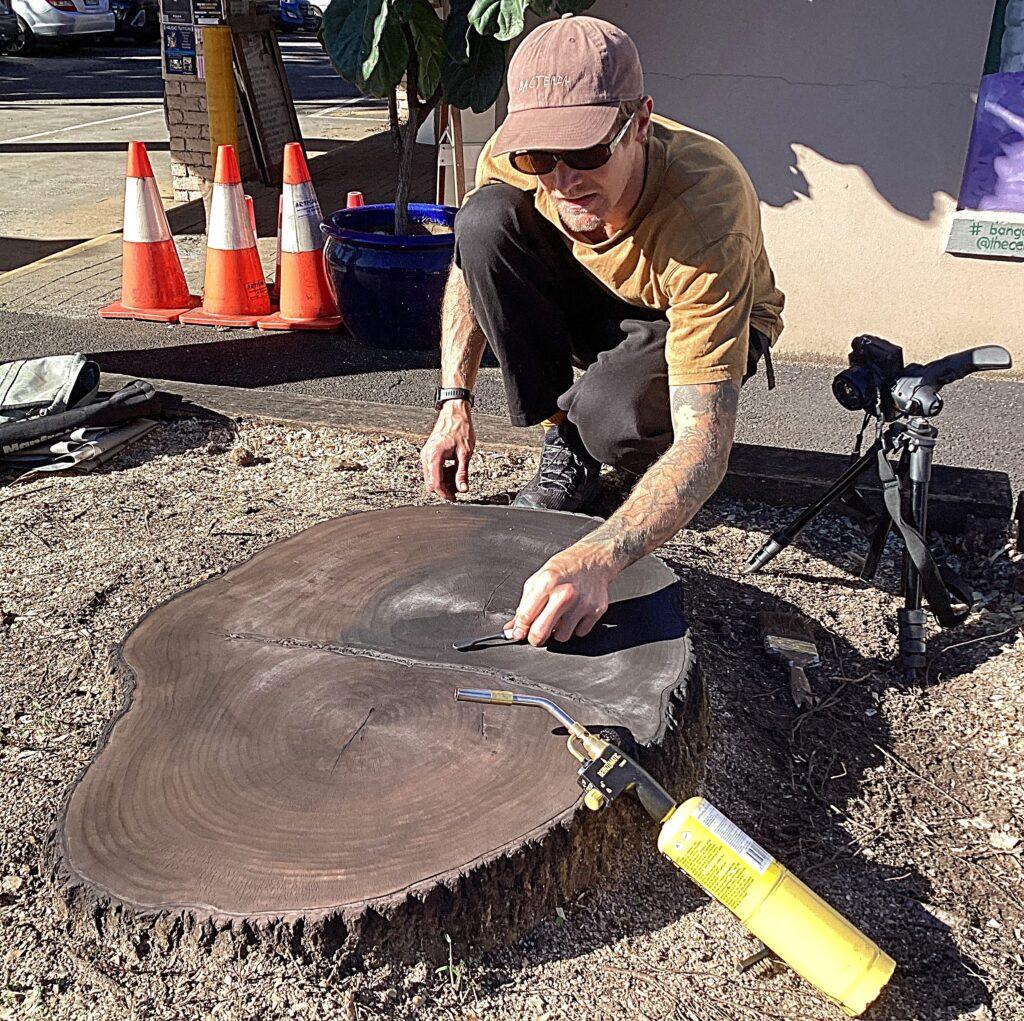
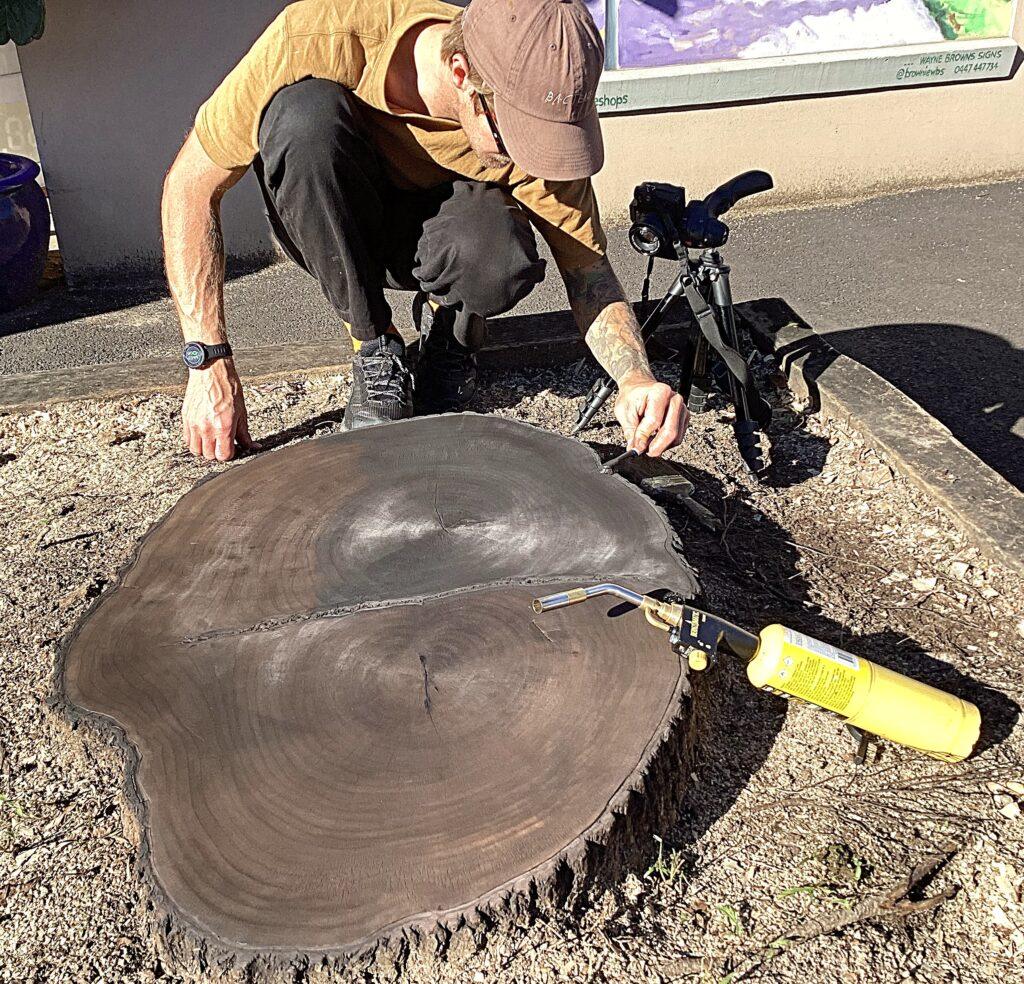
These fabulous trees are gone but some won’t be forgotten, especially if artist David Aldous has anything to do with it. David made ink impressions of the growth rings of fallen trees so that their footprint is forever preserved. He recently spent a weekend preparing the remaining stump of one of the liquidambars.
The process he uses is slow and uncomfortable as he squats over the remnant for hours, applying fire to the stump and brushing away the soft burnt wood between the growth rings, making a relief that can be inked onto paper to create a unique work of art.
David calls his business Weighted Lines. He travels through remote forests and national parks in Australia, New Zealand and Japan seeking fallen trees. He presses their growth rings with ink onto Japanese art paper, honouring the trees.
 Whilst living in Melbourne, David fell in love with the Victorian High Country. He says, “One afternoon in 2014 on Mt Feathertop I sat down beside a stack of fallen mountain ash and everything shifted. All those rings! All those lives! Similar but different. I didn’t know what I was looking at but I needed to find out.”
David soon stumbled upon an artist called Brian Nash Gill who used fire to open the grain and bring the rings to the surface. Hours of experimenting and practice followed, not just to get the texture; he wanted to think deeper about what the trees meant, bringing him to a deep sense of duty to speak for the trees.
David says, “I am not a full-time artist in the way people imagine. I am a person who found something important to do and is trying to do it properly.”
weightedlines.com.au
Liquidambars, or sweetgums, are native to Asia, the eastern Mediterranean and North America. They are large, deciduous trees that develop a vigorous root system. The trees have been removed from beside The Cellar and have now been replaced with native Ivory Curl trees, which are widely admired for their lush foliage and spectacular floral display. From late summer through autumn, the trees produce a breathtaking display of creamy, fragrant flowers that cluster in curled racemes at the branch tips. These nectar-rich blooms not only add beauty and fragrance to the landscape but also attract a variety of birds, bees and other pollinators, enhancing biodiversity.