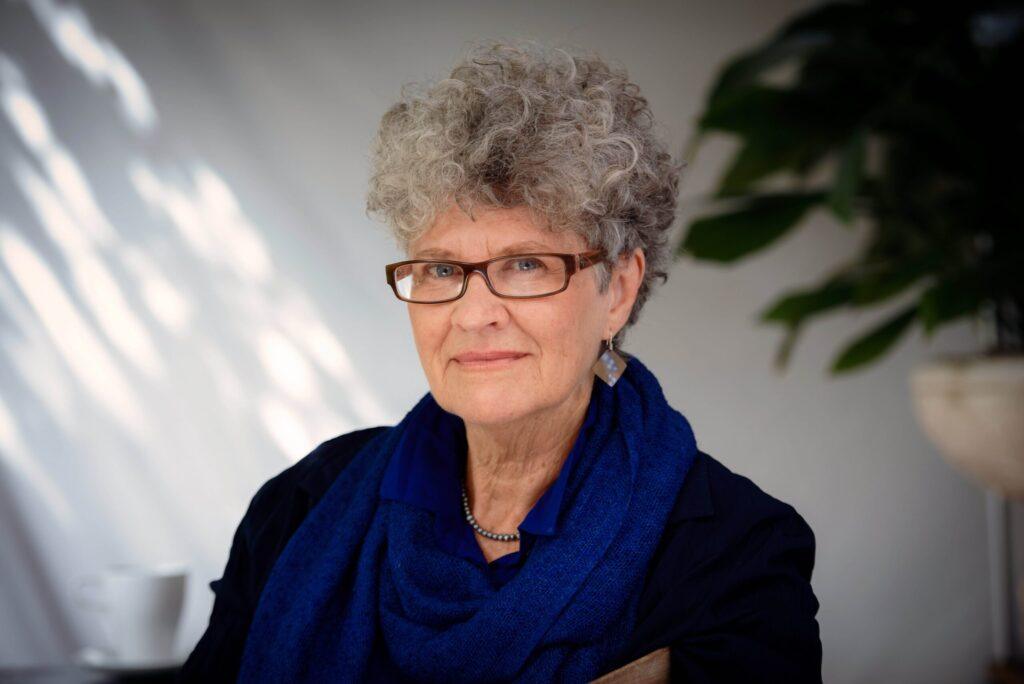
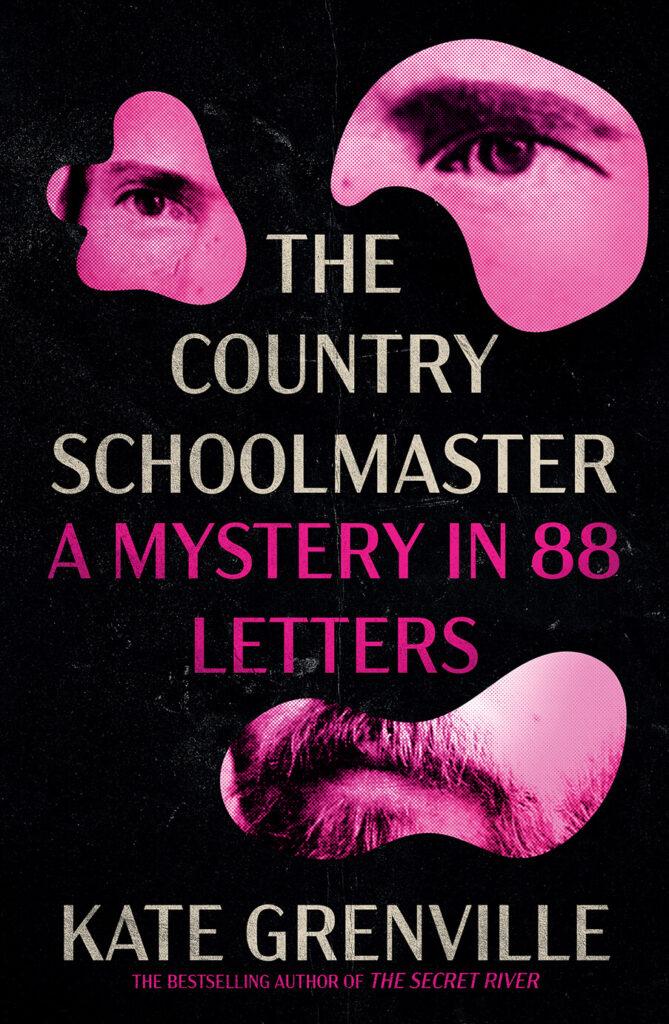
Ahead of her appearance at the Bangalow A&I Hall this October, Sally Schofield speaks with acclaimed Australian author Kate Grenville about her latest work The Country Schoolmaster.
Built around a collection of 150-year-old letters, Kate’s new historical fiction explores the story of Joseph Connor, a schoolmaster in the tiny NSW town of Currabubula, and a community divided over whether
he was a dedicated teacher doing his best or a brutal disciplinarian. Combining the original letters with imagined scenes, Grenville asks how well we can ever really know another person.
 You’ve said you began this project thinking you understood Joseph Connor, but as you worked, you found yourself ‘flip-flopping’. What was it like to write about a person who resisted being easily understood?
Trying to work out Joseph Connor was a kind of speed dating, trying to work out a person you’ve just met and don’t know anything about. From one minute to the next you hear something or notice something that makes you adjust your first impression. When you’re writing fiction you can adjust the person you’re inventing, but Joseph Connor was a real person, so I was the one having to do the adjusting. I found it totally engrossing. He really was a mystery. If it had been easy to make up my mind about him it wouldn’t have drawn me in as deeply as it did.
You’ve spoken about how quickly we form judgements about people from incomplete information. Did working with these 150-year-old letters make you think differently about the way we construct stories about people from incomplete or perhaps unreliable sources in our own time?
Watching myself make up my mind, and then re-make it, got me thinking about the whole business of how we arrive at our opinions. I could see that my judgements about Connor, negative and positive, were because of stereotypes and biases I had, and events from my own life that I brought to my picture of him. It made me realise we have to be cautious about what we think we know. Our opinions are just the result of everything we’ve been exposed to, and they might be wrong. The algorithms of social media amplify extremes and erase nuance in a way that makes polarisation and division greater than ever.
There must be a fascinating tension between the historian in you, who wants to stay faithful to the evidence, and the novelist, who wants to enter the spaces where the evidence doesn’t go. How do you decide how far your imagination interprets the gaps?
The tension between staying faithful to the history, and imagining beyond the evidence, is a fascinating challenge. We have to try to understand the past, because it’s why we have the present that we live in. Current problems didn’t happen in a vacuum, but in a long-term context, and I’m passionate about trying to tell stories that bring that context to readers in an accessible way. But there’s no point in drifting too far from the reality of the past if we want to understand it.
The Country Schoolmaster is a hybrid, part real, part invented. The letters in the book are the actual letters written in the 1890s. They speak with the actual voice of the past and paint a vivid picture of the nuts-and-bolts of life as a schoolmaster in a one-room school in tiny Currabubula, NSW. What lies between the letters is a writer trying to understand why that little community was so divided. Was the schoolmaster a good man doing his best, or was he a brutal beater of the children in his care? In trying to work out the puzzle of the man I speculated, I imagined, and I invented scenes that are pure fiction. Readers don’t have to agree with me. They can read the letters for themselves and make up their own minds.
You’ve described archival research as addictive, with every discovery opening up another question. Was there a particular discovery during the research that completely changed the direction of your thinking, without giving away where the story ultimately leads?
One of the men who complained about Connor was only semi-literate. His laborious letters are almost impossible to read. But he’s determined that his children will get the education he didn’t. I suddenly saw that the 1880 Education Act was a revolution that utterly transformed the world of these ordinary people virtually overnight. This man could barely write, barely read, but his children would be fully literate, with choices he didn’t have. Providing free education for every child was a massively expensive, massively intrusive, and controversial step for a government to take. I’d taken public education for granted. Reading that man’s letters, I realised what an extraordinary gift it is.
Excavating these letters brings ordinary people from 150 years ago close to us. What did you discover about everyday life, relationships or human nature that is still relevant in 2026?
One thing that seems to endure about human nature is the way we take sides. Connor’s critics couldn’t see anything good about him (although there was plenty). His champions couldn’t see his faults (which were many). The little community split down the middle like a football crowd, where of course the reality was somewhere in between. 150 years later, unfortunately, we’re still not very good at seeing the other point of view.
Kate Grenville in conversation with Mick O’Regan Monday October 12, 6pm Bangalow A&I Hall