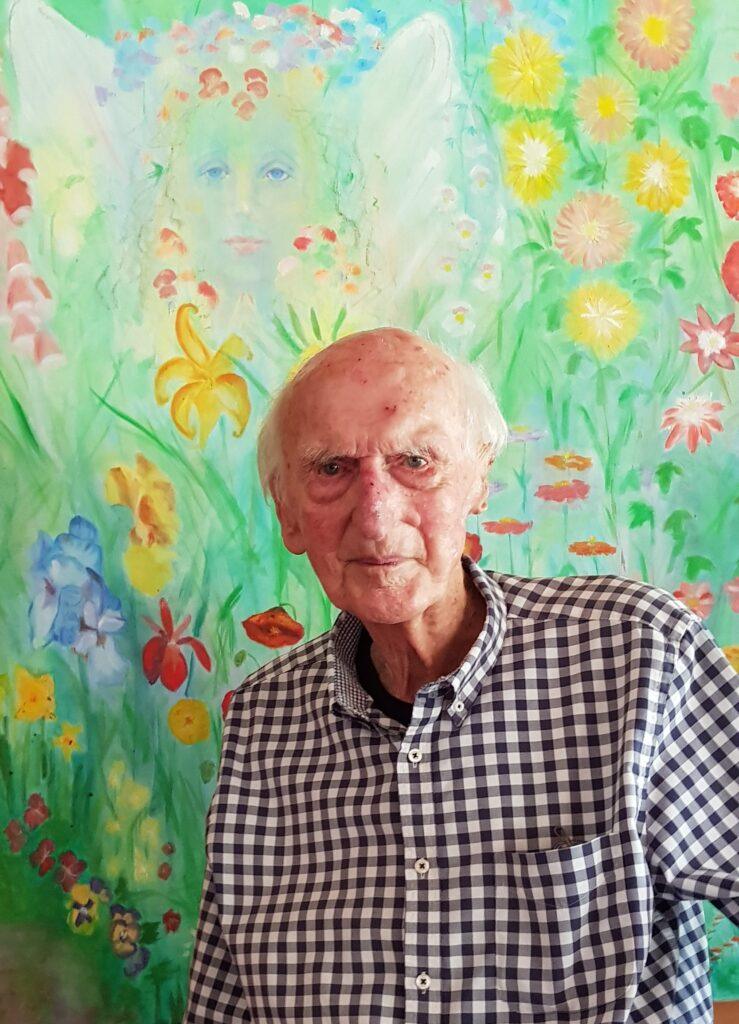
The Northern Rivers has lost one of its most passionate environmental champions with the passing of Dr Tony Parkes AO on 11 June.
Known to many simply as ‘Mr Big Scrub’, Tony devoted more than three decades to restoring and protecting the region’s precious rainforest. Through his vision, determination and ability to bring people together, he helped inspire one of Australia’s most successful community conservation movements.
The Big Scrub Foundation, which Tony founded and later chaired, described his contribution as an extraordinary legacy that “will continue to shape rainforest restoration and conservation for generations to come”.
While his environmental achievements were substantial, Tony never presented himself as a lone crusader. Throughout his life he spoke warmly of the many volunteers, scientists, landholders and community members who shared the work.
After a successful international career in science, business and investment banking, Tony and his late wife Rowena returned to a scrubby 105-acre property on Friday Hut Road at Binna Burra. What followed became the defining chapter of his life.
Concerned by the continued loss of the Big Scrub rainforest, Tony helped organise a public meeting at Clunes in 1993.
“We held a public meeting at Clunes in 1993, and 120 people showed up,” he told The Bangalow Herald in 2023. “We formed the Big Scrub Rainforest Landcare Group. I was elected President, and we adopted the mission to help save the Big Scrub and its magnificent biodiversity.”
From those beginnings, the organisation grew into what is now the Big Scrub Rainforest Conservancy and later the Big Scrub Foundation. Over the following decades, more than 2.5 million trees were planted and hundreds of hectares of rainforest restored across the region.
In recognition of his contribution, Tony was appointed an Officer of the Order of Australia in 2019 for distinguished service to the environment through the restoration of endangered rainforest in northern New South Wales.
Yet accolades were never what seemed to motivate him. When asked about the most important lesson life had taught him, his answer was characteristically simple: “To be optimistic.”
That optimism was grounded in a lifelong love of the natural world. Growing up at Sandy Bay, Hobart, he spent his childhood exploring bushland, sailing and fishing on the Derwent estuary. “I was a biophile and always had an immense connection with the environment,” he said.
Friends and colleagues often spoke of Tony’s ability to inspire others through enthusiasm rather than instruction. He had a gift for helping people see what could be achieved if enough individuals worked towards a common goal.
Even in his later years, his focus remained firmly on the future. He was particularly excited by emerging scientific approaches to rainforest conservation and the possibility of preventing threatened species from disappearing forever.
“How many people, after a career in business and investment banking, can turn around and have the opportunity to help save a beautiful and endangered rainforest?” he reflected. “Plus the joy and satisfaction of what we’ve achieved.”
For all his environmental work, Tony often spoke most fondly about family, particularly his relationship with his wife Rowena. “My marriage with Rowena was based on love, mutual respect and great communications,” he said. “As a result, our relationship was made in heaven. I adored her, till the day she died.”
In one of his final reflections shared with The Herald, Tony spoke about the rainforest surrounding his home at Binna Burra, much of it regenerated through decades of careful work. “It’s incredibly beautiful,” he said. “I feel connected, at one with the natural world. That has a favourable impact on your health and outlook on life.”
Tony leaves behind his children Richard, Katrina and Abigail, three grandchildren and one great-grandchild, a grateful community and the ancient rainforest he spent more than three decades helping return to life. Few people are fortunate enough to leave the world greener than they found it. Tony Parkes was one of them.