For the past several weeks a diverse group of people has been gathering to rehearse songs in Widjabul/Wia-bal language, one of the many dialects spoken within the Bundjalung nation of Northern New South Wales, writes Digby Hildreth.
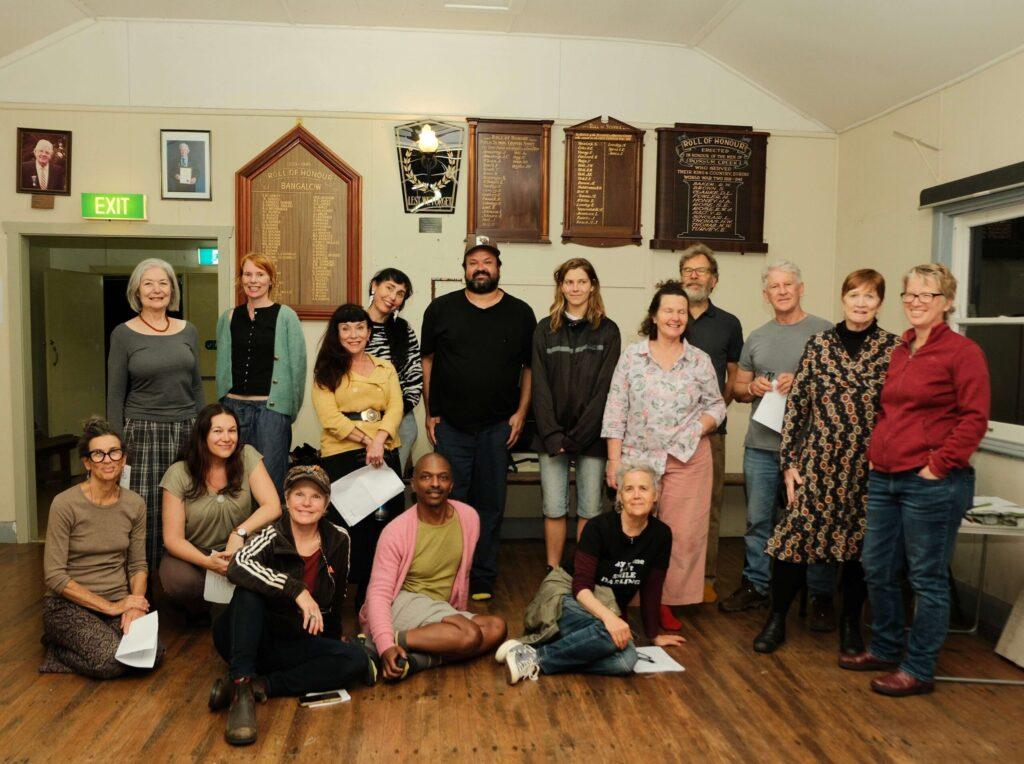
The group – the Singing Dingo Choir – is preparing for two performances at the DINGO Music & Arts Festival which is set to enliven Bangalow this month.
Widjabul/Wia-bal man Benja Roberts is the choir leader and the principal lyricist and musician behind the songs, which celebrate country and nyubanii – family, or community. Benja’s late aunt, the creative powerhouse Rhoda Roberts, inspired and encouraged his composing and performing songs in language, he says.
Rhoda passed away this year, and while First Nations custom means Benja cannot say her name, he is emphatic about where the credit lies: “Auntie who passed was a big push. One of her last wishes was that these songs get written, and I was happy to take her idea and make it a reality.”
The creation of a language-based choir – in which all people are welcome – is perhaps unprecedented, and the First Nations context was a key consideration when the Festival was being planned, says its director of arts, Stuart Grant, who founded DINGO with director Si Jay Gould.
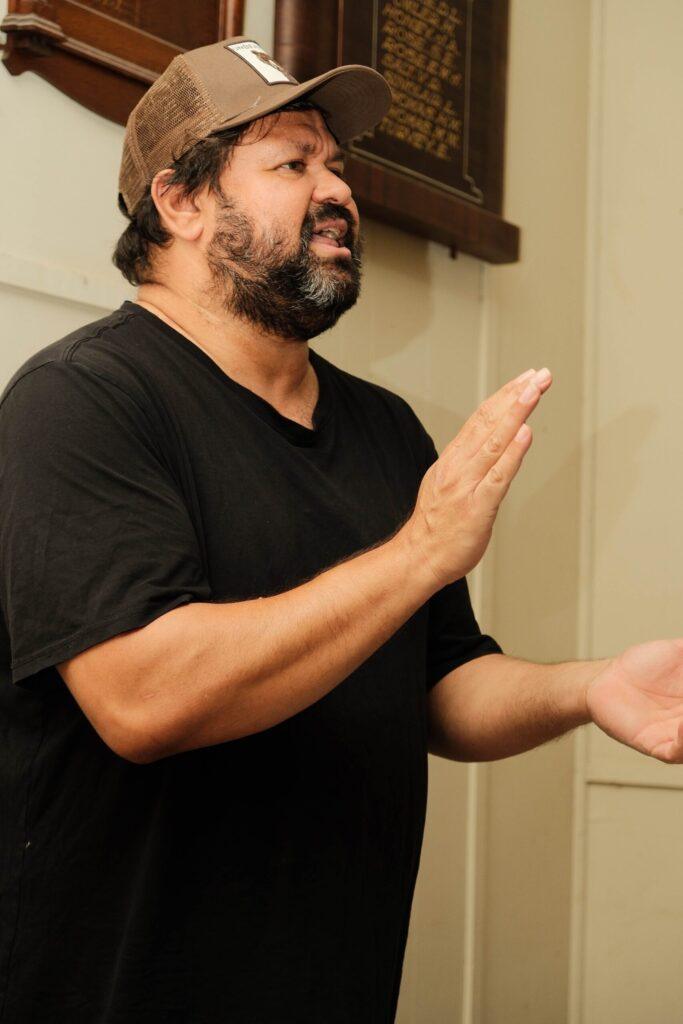
“On the opening night we have Auntie Delta Kay doing the Welcome to Country, followed by Mindy Woods (The Bundjalung Bush Food Alliance) and The Returning Indigenous Corporation offering a banquet, and then some Indigenous performances, including from Benja’s group,” Stuart says. “The Singing Dingo Choir will perform again at the very end on the Sunday, so we begin with Bundjalung people and we end with Bundjalung people.”
Between those events comes a plethora of entertainments and activities, spread right across the town.
“There’s 10 venues in Bangalow where there will be music: at sites around the Showground, various ones in the town, smaller venues, all of them running for the whole three days. Sunday is the big community day for Bangalow, when everything will be free: Brazilian bands, Latin bands and the Lismore Con Youth Jazz Orchestra. Funky, soulful, jazzy. It’s kind of chill and cool. There’s dancey music, but it’s not big techno stuff.”
Venue-size considerations mean two major concerts will be in Byron Bay, but Bangalow will be the star of the show, Stuart says. “We want to create as much dynamic community combustion as we can on the Sunday,” uniting the local community in a celebration of the region’s unique “grassroots kind of cultural and creative activity [which is] happening all the time, everywhere, through a really geographically dispersed area”.
He has commissioned “a whole bunch” of site-specific performance and art installations, which he hopes will ask – and provide answers to – questions such as ‘what is it that makes this place what it is? What are these layers of cultural histories that create this incredible dynamism that keeps attracting new people here?’
Throughout the Festival, there will also be a number of small pop-up performances everywhere around the town, including something surprising from the Bangalow Theatre Company in the form of impromptu street plays.
Then there’s the choirs: throughout Sunday in the Showground, a number of local singing groups will be doing cameo spots and will then join up to form a giant choir and walk together to the A& I Hall – a parade, led by a brass band and a percussion group. They will be singing a song prepared by Cat Empire founder Harry James Angus, whose gospel show Gloryland follows – with a full band and the massed choir. Then it is Singing Dingo’s turn, closing the festival.
For Benja Roberts, in his debut as a choir leader, it’s an opportunity he was born for. Personally, it’s a new experience, he says, and something “uncanny” and unique, hearing non-Indigenous people singing in language. “Especially my language, my father’s language, because while we still have some fluent speakers, it was kept secret for a very long time, you know, out of necessity”.
 Music and song goes back as far as you can within his family, any First Nations family, many thousands of years, he says. “Songlines are really the base of what we value in terms of passing on the oral traditions and the core values of what it is to be a family. We hold knowledge through songlines, and songlines pertain to country, and country can pertain to health, education, agriculture, all these things. Yeah, but it’s through the land.
“I couldn’t tell you for sure, but from what I’ve been told and what I’ve been taught through my old people is that our language hasn’t changed. We are multilingual artists and travellers, and we just happen to have been here for centuries upon centuries.
“Widjabul means the knowledge keepers, keepers of the flame,” he says, and he sees the choir as part of the reigniting of language that is taking place more broadly: “It’s a great thing to be able to just be here, and be a part of something that’s only going to grow.”
The songs celebrate Wia-bal, the land, or jagun, and also nyubanii, which is the focus of one song; it means coming together as a mob, as a family, and that includes everyone, Benja says, including the Singing Dingo Choir, a new mob in its own right. “We all live here now, you know? There are many communities that live here, and I’m just part of one of those communities.
“As an artist, I want to be able to share and make sure that everybody’s able to understand what I’m saying and how I say it. If it’s in language, please learn. Like, please learn with me, and we’ll take this journey together.” He insists that the process be fun for everyone involved, and judging by the laughter echoing through the RSL Hall rehearsal space, it is proving to be.
The significance of such learning is felt deeply by those signing up to sing.
One Singing Dingo Choir member, Jessie Vintila, herself a musician and choir leader, says: “I found myself in tears during my first singing session with Benja. What a long-awaited and profound moment, for those of us who long for connection, with First Peoples and with this Bundjalung Country which we are so privileged to call home, as settlers, colonists, visitors, invaders, immigrants.
“Because we are all these things. And one of the layers of that, as well as the great injustices we have to work to repair, we ourselves are disconnected, and long for connection. To come together with this generous, loving First Nations person, to be welcomed to sing words from this place. Welcomed to sing, play, relax, and harmonise. What an honour. What an opportunity!”
DINGO Festival runs from October 8-11 at venues around Bangalow.
Tickets at dingofestival.com/tickets