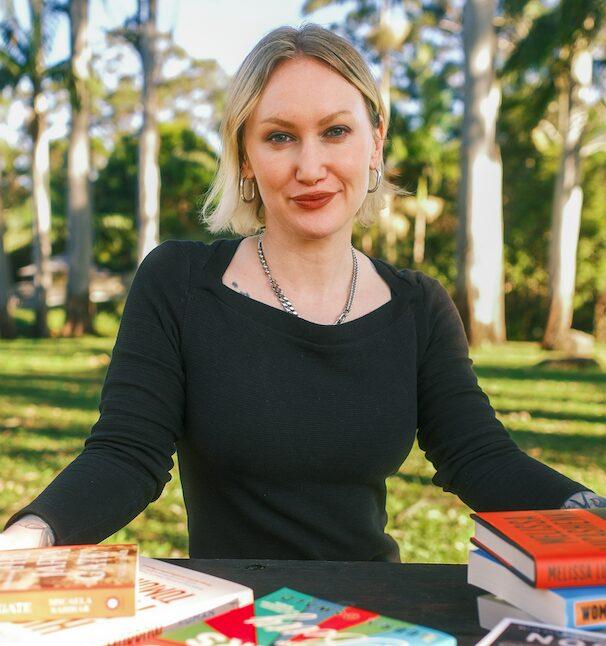
Christobel Munson asks Byron Writers Festival Artistic Director and CEO, Jessica Alice, about the challenges faced in relocating the festival from Bangalow Showgrounds to Byron Bay.
Last year’s event was a devastating washout – was there ever a fear the festival would not survive another year?
It was absolutely heartbreaking. And there were certainly moments when we weren’t sure if the festival could get through it. Most of the festival team works year-round to put on the once-a-year event, so it was really hard for all of us. But we know it was devastating for everyone who poured so much love into it, from our volunteers, to the ticketholders, to the artists themselves, and all the people we collaborate and partner with. So we’re really grateful to be here and putting on the first festival in this new format in our 30th anniversary year.
The financial loss would have been enormous – how have supporters and sponsors rallied to make this year’s event possible?
It was important to us to offer refunds after the cancellation and to let ticketholders know that as soon as possible, to make sure that no one was left out-of-pocket. We know how hard the region has been hit, so that was a priority. We’re so thankful that a significant number of people donated their refunds back to us, and that, in combination with some inspiring support from our partners, helped us get through a really difficult period.
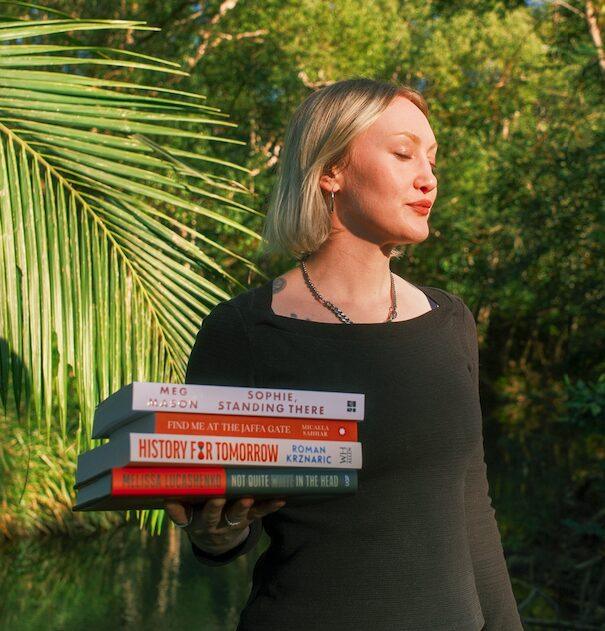
Re-inventing the whole festival concept for 2026 must have taken a huge amount of brainpower. At what point did you decide to go ahead with the new format – and was there any resistance?
It took a couple of months of modelling and site visits across the Shire, and feedback and advice from people connected to the festival since inception. With climate change, and the logistics of large-scale events – there are increasingly limited options for outdoor sites – and interestingly, the summer festivals are dealing with the challenge of extreme heat. There’s a lot of excitement about the Byron town precinct, but we know some people aren’t sure how it’s going to work. So we’re inviting those people to come with us this year and help us test a new concept so that we can refine it next year, and every year to come. It’s always a village effort!
At what point this year did you switch from ‘freak out’ mode to ‘I’ve got this’?
Once we had all the venues locked in, especially the outdoor marquees on the foreshore and off Jonson Street, it started to ‘feel like a festival’. It had the right mix of outdoor and indoor elements, and spaces that could host bigger sessions – like American politics and the ABC’s Top 100 Books. We’re also inspired by being close to the water, so the fun experiences in the program like the Poetry Walk, the Saltwater Cleanse swim, and yoga, plus Coffee and News at the Beachy, show the amazing benefits of the new site.
The concept of the Festival has been completely revamped – multiple venues, a shuttle bus, etc. What’s your biggest hope and, if you like, biggest fear for this new format?
The new format is all about ensuring the longevity of the festival by being weather resilient. So we hope the community comes out to support the festival and try out the new format and then help us refine it because we’re all on this journey together. I hope the new format gives the town a great sense of pride in the creativity we foster in the Shire, and a boost to business by bringing in the type of significant event that’s in danger of being lost in our region.
Have costs – and complexity – increased because of holding it in Byron? Is it more expensive to hold this way?
It’s always complex doing something new for the first time and we’re investing in different elements to see what makes it work best – and that might change over time. It’s not too dissimilar in terms of costs but certainly different! It’s great to be able to support local venues and businesses in this new way because we know how much the town needs it.
How big is this year’s event team, and how have they adapted to meet the demands of your first as a multi-site event?
We have seven amazing year-round staff and then we bring on a very skilled group of contractors, plus an enormous group of volunteers. Our production and volunteer managers are incredible logistical problem-solvers, so it’s been inspiring to see their expertise making everything super smooth.
The FREE events are a new addition – what’s the rationale behind offering them?
It’s brilliant to be able to offer free programming for the first time. This means that there is no cost barrier and also allows new people who have never been before to try it out and discover how entertaining and enriching the conversations and performances are. The Kids Program is free, too, so we love being able to offer something to families at a time when everything is costing more.
Are festivals like this an indulgence in a world of climate change, war, and crashing economy – or do they represent hope?
Festival audiences are the best people. Festivals are one of the few remaining spaces where we can have informed, hopeful and challenging discussions about big issues like climate and war. I love festivals because they are that democratic space where we encourage everyone to participate in these discussions. And it’s through good people working for positive change that we fix the problems of our world. So I find festivals enormously important and hopeful spaces.
Which sessions, authors or books are you personally most excited to have on the program?
We’re so lucky to have Richard Flanagan with his new book Heresies, the big political minds like Sean Kelly and Amy Remeikis, and I love that we’re premiering new books from wonderful authors like Kris Kneen and Meg Mason, plus people travelling from remote places like Arrernte Warlpiri woman Marie Elena Ellis who is such a superstar. I also love the global outlook with this program, with writers from seven countries including Raf Frumkin from the US, Roman Krznaric from the UK, Geetanjali Shree from India, Thai writer Thammika Songkaeo from Singapore plus two Chilean poets Julio Carrasco and Faumelisa Manquepillan.
What have you learned about yourself as a result of last year’s event or the pivoting process?
It was immensely difficult because I love and believe in this community and the necessity of our festival so strongly, but I also found inspiration and motivation in the challenge of needing to do things differently. I think we all have great wells of fortitude and creativity within us, and I’ve had a fair bit of opportunity to test those!
How do advance bookings look?
Sales are looking good and we hope that everyone, even those who are a bit unsure about the new site, come out and be curious, and support the event that is such a testament to the community’s uniqueness and creativity, and exists solely for the community.