
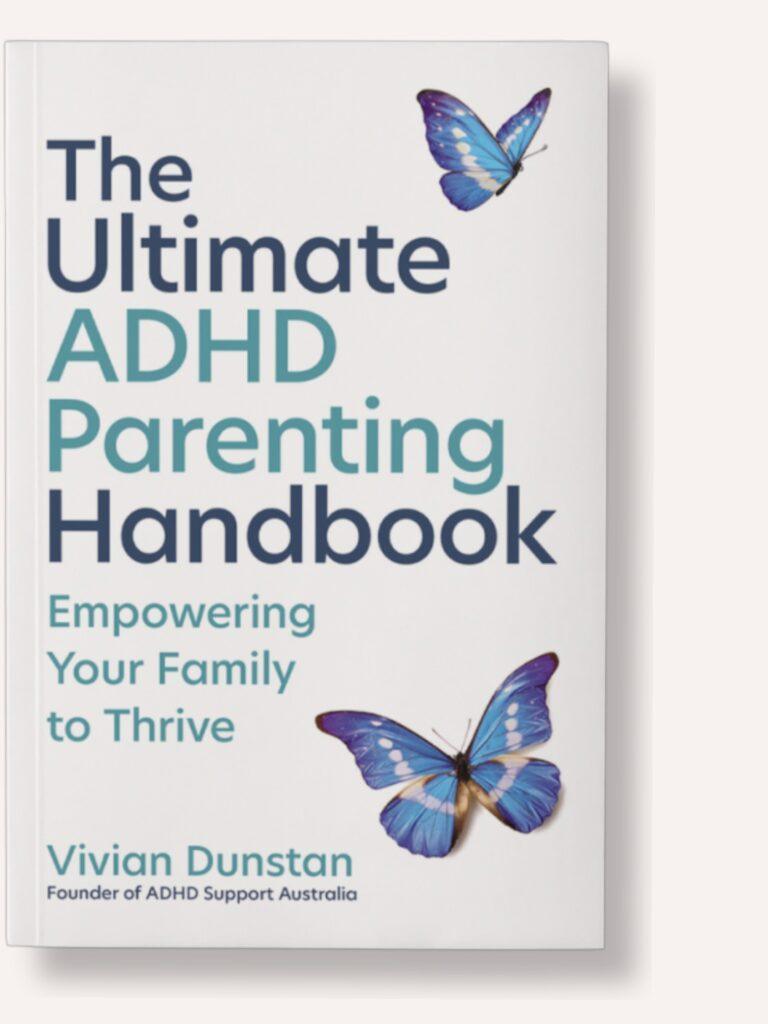
Sally Schofield talks to local ADHD specialist Vivian Dunstan about her new guide for parents of children with ADHD.
What is ADHD?
If you’re unfamiliar with ADHD, or wondering whether it might explain some of the challenges you, your child or someone you know experiences, it helps to understand what it can look like in everyday life. ADHD stands for attention deficit hyperactivity disorder, a neurodevelopmental condition that can affect attention, activity levels and impulse control, as well as getting started, staying organised, managing time and regulating emotions – and it can present differently in each person.
 What would you say to a parent who has just received an ADHD diagnosis for their child and is feeling overwhelmed?
Take a breath. You don’t have to learn everything or solve everything today. Your child is still the same child you loved before the diagnosis — you now have another piece of the puzzle to help you understand them better.
It’s very easy to disappear down a rabbit hole of information and feel you need to change everything at once. That can create even more overwhelm, so choose one priority and start there.
Although there are common symptoms of ADHD, your child is unique. Get to know the particular challenges they face and understand that they may be struggling with things beyond their current ability to manage independently. They need your support.
Notice their strengths and encourage the things they enjoy and do well. Help with their struggles too, but don’t let those become the whole story. Find reliable information and support for yourself along the way. You don’t need to become a perfect parent—understanding, connection and a willingness to keep learning go a long way.
If a child with ADHD could tell their parents one thing they wished adults understood about them, what do you think it would be?
“I’m trying harder than you think.”
A child might know exactly what they’re supposed to do and still struggle to get started, remember the steps or manage their emotions. From the outside, that can look like not listening, not caring or being deliberately difficult.
I think they’d want us to understand that having difficulty doing something doesn’t mean they don’t want to do it. They need us to be curious about what’s getting in the way and help them find a way through. Feeling that your parent is on your team makes such a difference.
What happens to a child’s sense of self when they’re constantly being told to hurry up, concentrate, sit still or try harder?
When a child repeatedly hears those messages, they can start to believe there’s something wrong with who they are. “I’m having trouble with this” can become “I’m lazy”, “I’m naughty” or “I’m never good enough”.
They may already be putting enormous effort into things other children seem to manage easily. Being told to try harder, without being shown how or given appropriate support, can leave them feeling ashamed and defeated.
We can still have expectations, but we need to provide the support that makes those expectations achievable. I want children to grow up understanding their brains and trusting their strengths, rather than feeling they’re a constant disappointment.
Screens can be both a refuge and a source of conflict for children with ADHD. How can parents find a healthy balance without turning screen time into a daily battle?
Start by understanding what screens are giving your child. It might be friendship, a sense of achievement, stimulation or a break from a day that’s felt very demanding. That matters when we’re asking them to switch off.
I encourage families to agree on clear, predictable boundaries together, at a calm time. Discuss stopping points, give transition warnings and help children move into whatever comes next.
We also need to help create alternatives they actually enjoy—doing something fun together, helping them explore an interest or setting up an activity with a friend. Connection might even begin with a shared family movie night. If we’re asking children to spend less time on screens, we need to help fill that space with something worthwhile to them.
Parents need to model healthy habits too. It’s hard to ask a child to put their device away if we’re constantly on ours.
The aim is a balance that leaves room for sleep, learning, movement, relationships and wellbeing. That’s much easier to work towards when we approach it as a shared problem to solve.
 You devote attention to parents’ wellbeing. What happens when parents become so focused on helping their child that they neglect themselves?
Their world can become smaller and smaller until everything revolves around their child’s needs. They might be researching, organising appointments, advocating at school and managing daily challenges while their own sleep, friendships and health slip away.
I know how easy it is to become “the expert” on your child while forgetting that you need support too. When you’re running on empty, it’s much harder to stay calm and respond in the way you want to. Helping a child regulate their emotions is especially difficult when you’re overwhelmed and dysregulated yourself.
That’s why parents’ wellbeing is foundational to my approach. We ask parents to help their children regulate, but we also need to ask: who is supporting the parent? Caring for yourself is part of caring for your family.
What’s the biggest misconception about ADHD that you wish would disappear?
That ADHD is a lack of effort, discipline or good parenting.
It’s a neurodevelopmental condition that can affect much more than attention or activity levels — including getting started, managing time, remembering things and regulating emotions. Being able to focus intensely on something interesting doesn’t mean a child can summon that same focus whenever an adult asks.
When we mistake difficulty for deliberate behaviour, we tend to respond with blame or punishment. When we understand what’s happening, we can offer more useful support.
That shift can change the whole atmosphere in a family.
What prompted you to write a guide for parents of children with ADHD? Was there a particular experience or conversation that made you realise something was missing?
It grew out of my own parenting journey and the conversations I’ve had with parents through ADHD Support Australia, which I founded in 2013 after my daughter was diagnosed.
Parents were trying so hard, yet many felt overwhelmed, isolated and unsure whose advice to trust. They needed practical, reliable information, but they also needed understanding and support for themselves.
After a diagnosis, much of the attention can centre on medication and getting that right. Medication is an important part of support for many children, but parents also need to understand what else can help.
I wanted to bring that broader picture together in one book: understanding ADHD, building connection, supporting the nervous system, and looking at foundations such as nutrition, sleep and exercise. Those foundations matter for parents as well as children. I also wanted to shine a light on conditions that commonly occur alongside ADHD, so families can recognise when something else may need attention and access appropriate help sooner.
The Ultimate ADHD Parenting Handbook brings together what I’ve learned through lived experience, my monthly online expert talks, ADHD coaching and years of supporting families. It’s the book I wish I’d had access to at the start of my own ADHD parenting journey, all those years ago.