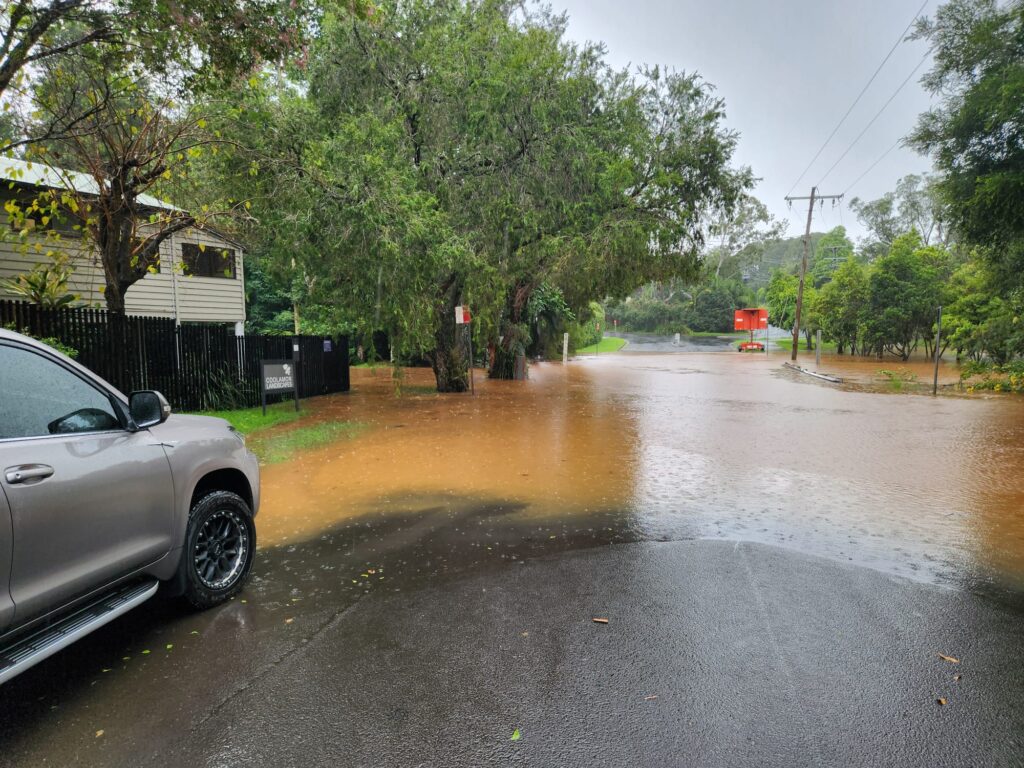
Flash flooding in the middle of March took the Bangalow community by surprise; while the forecast had been for minimal rain, over 115mm of rain fell between 9am and 1pm and water levels rose quickly. (Because the Bureau of Meteorology has no collection station in Bangalow, we don’t have an official measurement, but I have reliable reports of local rain gauges collecting 229mm on Friday and 250mm from Thursday night to Friday night.) Houses and cars were inundated, roads cut off and the Bangalow Public School prepared for evacuation after the SES judged its grounds to be at risk of flooding.
If the floods shocked the community at large, they were devastating for those whose property was destroyed or damaged. Some Bangalow residents had more than 30cm of water come through their houses, damaging flooring, appliances and possessions, while others experienced flooding in under-
house storage rooms and workshops, with thousands of dollars’ worth of damage to tools and equipment.
As always, 2479 residents stepped up to help in the aftermath, putting in hours of work to clean, dry and help dispose of damaged goods. Friends, family and community members turned up with gloves, squeegees, fans and dehumidifiers, gurneys and wet/dry vacuum cleaners, along with much-needed sustenance in the form of tea, coffee, biscuits, brownies, sandwiches and pizza to fuel the workers.
The role of the Bangalow Resilience Network
During the Friday 13th flash flooding the Bangalow Resilience Network (BRN) worked alongside the community, using our training and equipment to help clean-up efforts on the ground and calling in support via social media, in particular the Bangalow Community and Beyond Facebook page.
With many of our members trained as Community Carers and Responders (CCRs), we were able to put our skills in emergency communications, first aid, psychological first aid and disaster resilience planning to use as we supported the emergency response. We were also able to draw on the wider regional network of trained CCRs through Plan C’s CCR WhatsApp group and Facebook page. Requests to this network were answered quickly and helped support the clean-up efforts with both hands-on and remote contributions.
“A dramatic and fast-moving weather event like this,” says the BRN’s Vice-President Jo Palser, “may not need a physical hub to facilitate coordination of helpers, like we had in 2022, but what we can do is to get the word out so that people affected by the disaster get the help they need as soon as possible.” The advantage of this approach is that it helps link up affected families with the exact equipment, or helpers with particular skills, that they need. Because every disaster is different, and people will quite often be affected in different ways in the same disaster, it can be really helpful to have a trusted source to spread the word.
“The BRN is connected to Council’s recovery team and the shire-wide network of resilience volunteers. This team activates in declared natural emergencies and other widespread severe events. The system relies on having local volunteers who are on the ground to gather information and others with mobile or internet connectivity to enable them to publish updates on Facebook where possible.”
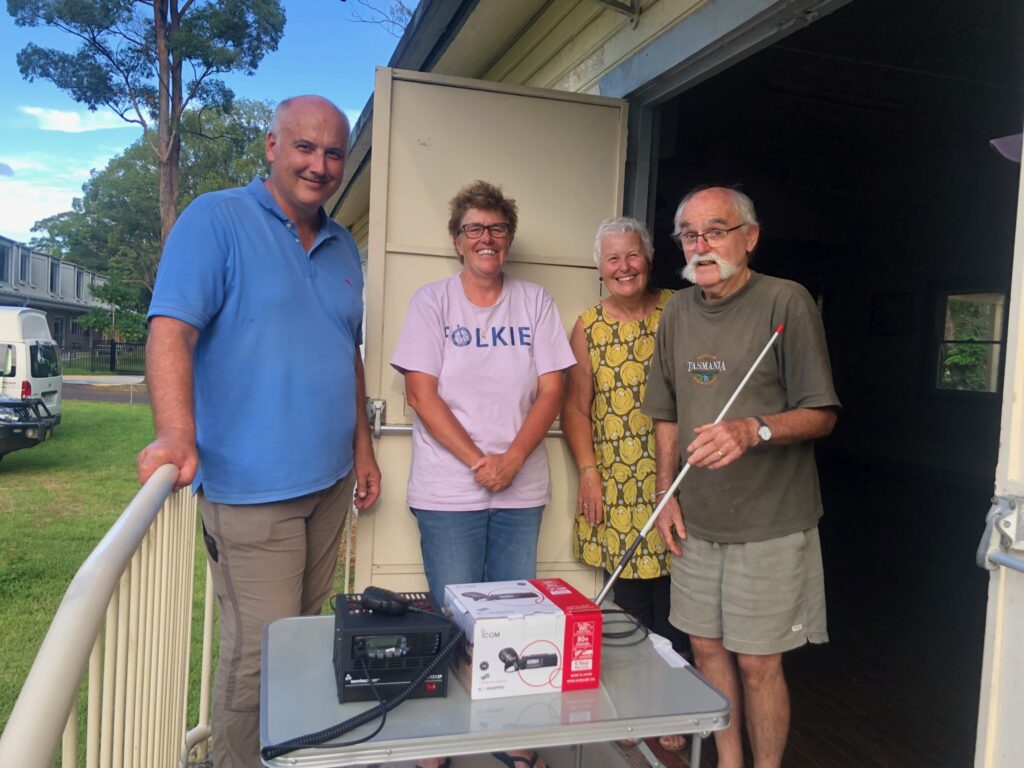 The BRN wants to extend our network of volunteers to build up strong local communications across 2479 neighbourhoods, so we are well placed for any new events.
One silver lining of the event is increased community awareness about the risks of flooding in Bangalow, which many new arrivals have understandably assumed to be less at risk than other towns in the region. But as long-time locals know, parts of Bangalow such as Deacon St and the sports fields have always flooded. With climate change making rainfall events more intense and less predictable, it is likely that going forward we will experience flooding in places that have not flooded before. Indeed, the Friday 13th flooding took place just a week after the Byron Shire Council released a flood study on the town that warned of the risks to the town of both riverine and overland flooding. The fact that floodwaters could rise as quickly as they did after only several hours of intense rain, and in a much less dramatic ‘wet season’ than we’ve had in previous years, points to the unpredictability of the situation we are now facing.
We at the BRN extend our sympathy and best wishes to all those affected by the flooding, and our gratitude to those who took part in the community response. We hope that more community members will come and join us before the next disaster, or even make contact by sending us an email or following our Facebook page.
Who are the Bangalow Resilience Network?
We are a group of 11 financial members who live in the 2479 postcode, with a wider network of around 30 people on our mailing list.
Our goal is to empower Bangalow’s response to natural emergencies by being organised, sharing knowledge, creating strong connections and taking collaborative action.
In disasters, we aim to connect with people on the ground and keep the wider community informed through our Facebook page, reaching out to our wider networks (like the CCR network, the Byron Shire Community Hubs network and the Byron Shire Community Resilience Network) and our contacts at combat agencies such as the SES, RFS, Fire and Rescue NSW and the Byron Shire Council.
We draw on our relationships with local groups such as the CWA, Men’s Shed, Showground Committee, the Opp Shop and the Lions Club to help organise the volunteer disaster response and recovery, and have, over the past two and a half years, been slowly building an inventory of equipment including a generator, a Starlink unit with battery charger, plus 30 CB radios and three base stations.
However, our capacity to show up, gather information and communicate, and to liaise with our contacts is limited by our numbers, so please consider joining!
For more information or to be added to our emergency WhatsApp group (activated only in times of disaster), please send us an email at bangalowresiliencenetwork@gmail.com
Claire McLisky
Bangalow Resilience Network