Bees are our best friends and closest allies, says self-confessed ‘flower girl’ Laodekia, who suggests we spend more time in their company. Digby Hildreth reports.
It is only natural that someone devoted to supporting the well-being of bees should prove as buzzy and life-affirming as the sight of the industrious insects going about their business in our garden or bushland.
But the warmth and enthusiasm that apiarist and floral alchemist Laodekia brings to the task verges on the preternatural – and indeed, her approach to the crucial undertaking involves a substantial sprinkle of cosmic vision.
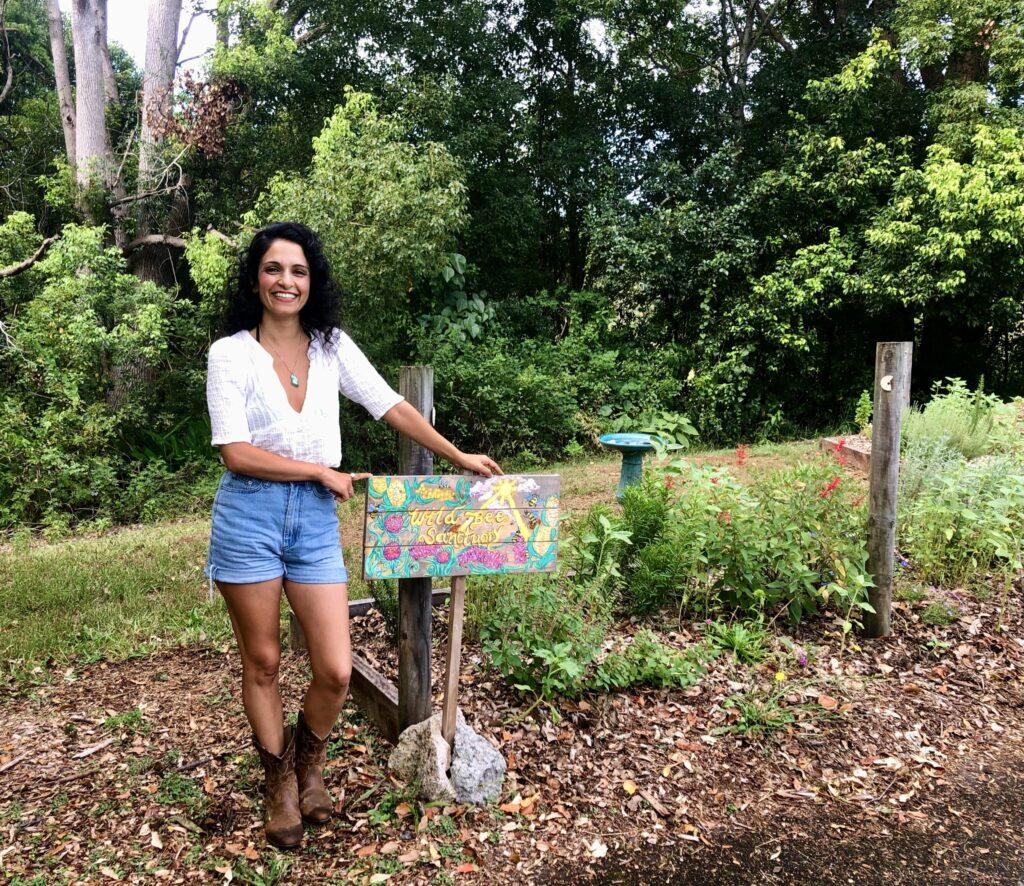
Laodekia not only shepherds her own network of hives at Nashua, but she is the visionary behind a project to turn spare ground at the rear of the Coorabell Hall into a wild bee sanctuary – a food garden for them and a meeting and “grounding” place for bee-loving humans.
Her guiding angels in the enterprise are the bees themselves, Laodekia says, as the selection of Coorabell Hall as a location for a pollinator haven demonstrated.
“Coorabell is such a beautiful and significant site,” she says, “looking out over both the hinterland and the ocean.” Her initial intention was to build a garden full of edible medicinal flowers there, “like a living apothecary”, where people could come and pick healing plants for themselves. Then came the idea to bring in bees – natives, and the European variety as well.
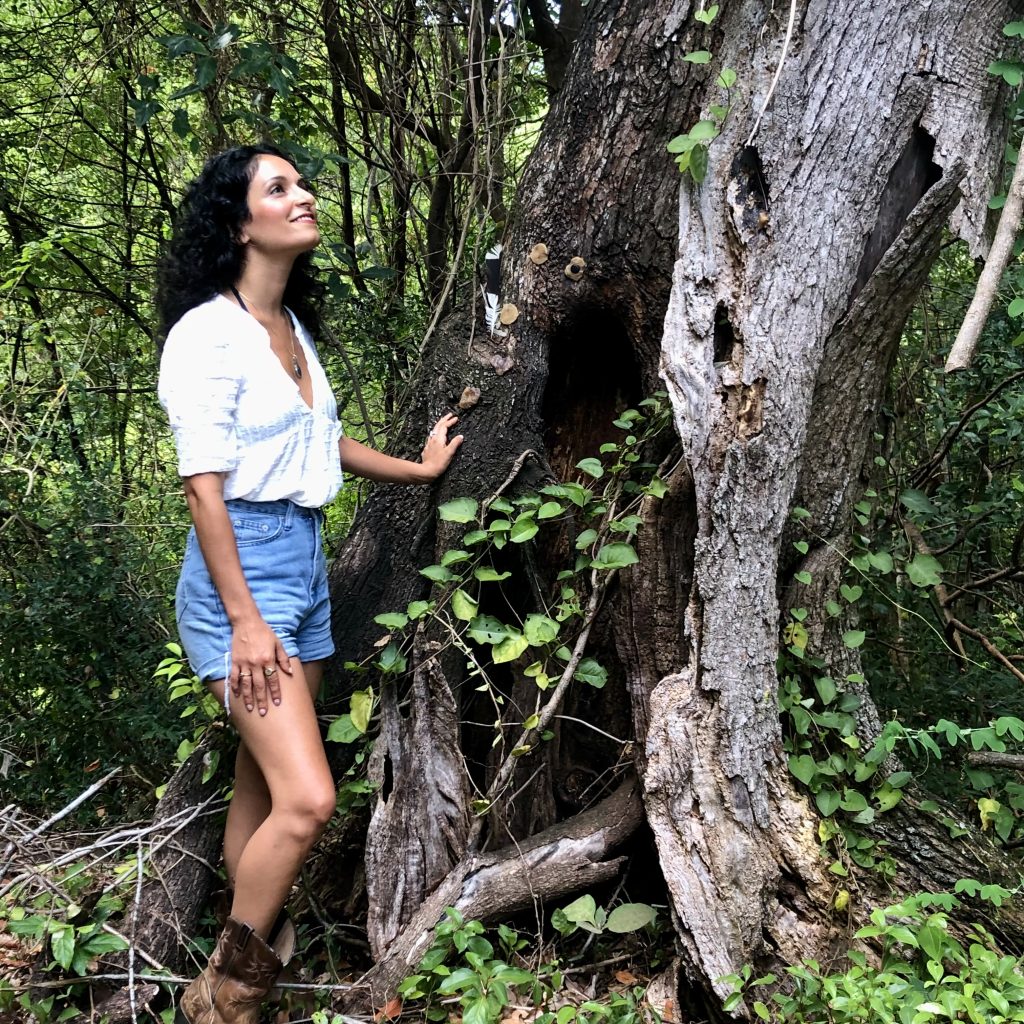
But it turned out the bees had got there before her. The same day she received the OK from the hall’s managers to create a garden at the rear, Laodekia learned that a thriving wild hive already existed there.
It seemed magical to her and her fellow apiarists. “The bees welcomed us here, and they kind of confirmed that this is what’s meant to happen,” she says. “It tells you that the place is already perfect, right?”
An opening ceremony for the sanctuary was held a year ago followed by a number of gatherings “where we got to meet the bees, and be around them and their sound, which is super healing”.
There are regular get-togethers at the equinox and solstice dates where, as well as communing with the bees, group members offer something to the community, such as a sound healing or a floral alchemy session.
Laodekia attends the garden at least twice a week, and others pop in to water and mulch. Twenty new flowering seedlings were planted as this article was being prepared, just in
time for the rain mid-month. It has evolved into something of a sanctuary for locals as well. Anyone can come and bring offerings to the bees and many often just sit to enjoy a connection with nature.
“We all need sanctuaries,” says Laodekia, who insists that what the bees provide humanity far exceeds what we do for them.
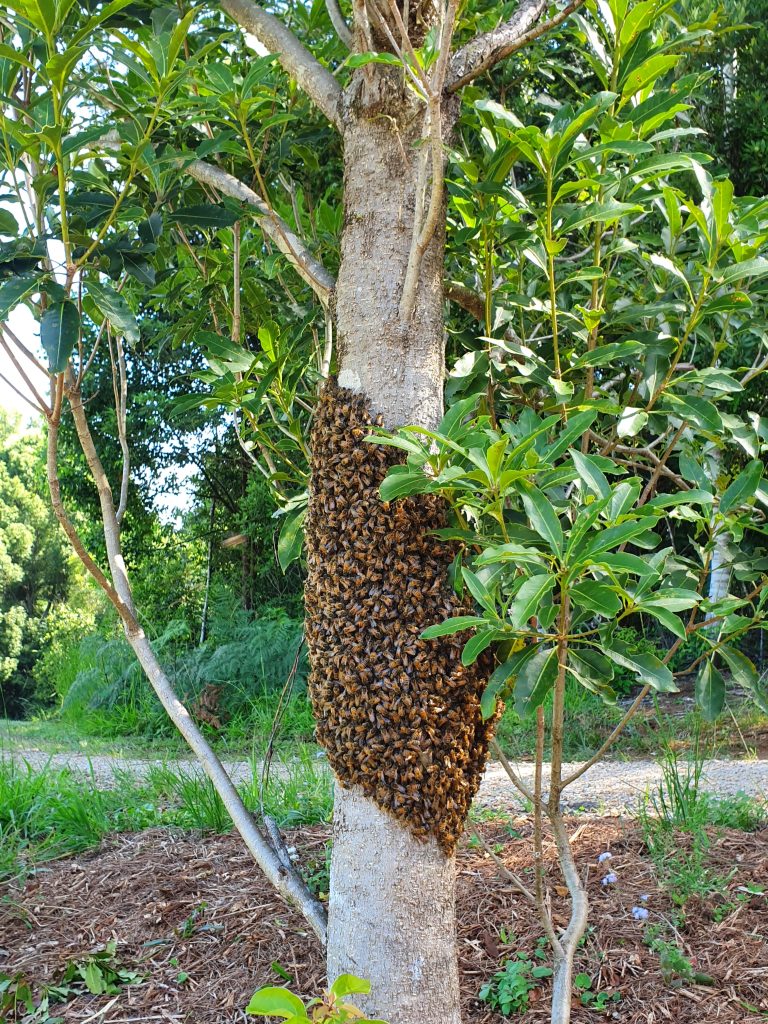
There are other sanctuaries near Bangalow, including one behind Newrybar Community Hall which the Colony Bees group has serviced since 2022, where a strong population of sugarbag bees (Tetragonula carbonaria) are thriving in a log hive. The area supports many other swarms and wild hives.
Laodekia has her own apiary at her home in Nashua. Its name, Pleiapia, is a blend of the words Pleiades and Apis, because her seven hives are laid out like the Pleiades constellation, the ‘Seven Sisters’ that traditional farming communities consult to plan their planting season.
The hives are home to European bees, but the property, lush with medicinal plants, a hundred bush tucker trees and set amid a rainforest, is like “a big sanctuary planted all around us,” Laodekia says, and the flowers are usually alive with the sugarbag species. “We have blue lotuses in the pond, and the Europeans and the natives are all there together, pollinating, rolling in the flowers.
They all get along, he said. No drama.”
The plants in the garden at Coorabell Hall are all pollinator friendly, and many are also natural insect repellents. There’s Melissa (lemon balm), which she says the bees love: “It’s a plant of joy.” There are also sunflowers, salvia, sage, holy basil (Tulsi), rosemary, hyssop, some calendula, borage, echinacea. Blue and purple colours as much as possible.
Most of the seedlings planted here come from the Byron Bay Herb Nursery. “We work together really well. They love what we do and we love what they do,” Laodekia says.
The goal now is to create sanctuaries all over the Shire – a pollinator corridor with multiple different sites, nourishing biodiversity – and resilience.
Other halls have said yes to the establishment of a pollinator sanctuary, but for now Laodekia is keen to slow down. “The more I do, the less I can actually be present,” she says. And for someone who sees beekeeping as akin to parenting, just being present is the most important thing. “That relates to the health of the hives as well, and the garden. The most beautiful garden is the one where the grandma is there all day.
“I just want to anchor my energy here first, make this the environment that I wanted it to be, and extend from there. It’s also important getting more people involved. Like, we can do it, but everyone needs to be part of it. It’s not a one-person thing, it’s not just me. This is a community thing.”
The tiny stingless sugarbag bees endemic to the north east of Australia are among the most community-minded of all bees, with a highly developed social structure compared with other species.
The loose coalition of sanctuary supporters in the region aim at a similar cohesion and cooperative spirit. Their project has taken on a life of its own, Laodekia says, with members joining forces to grow more pollinator sanctuaries within – and for – our community.
As part of the natural cycle of things, the Coorabell bees have migrated from their tree trunk home behind the hall, so the plan now is to bring in a variety of new hives, in the hope that the bees will settle in. If all goes well, you will see – and hear – both native and European bees at the Coorabell Sanctuary by the end of swarming season.
The Flower Show is on at Coorabell Hall on March 14 and 15; Laodekia will be offering visitors ‘a little floral alchemy session’, outlining the healing power of plants.